



What's Happening?
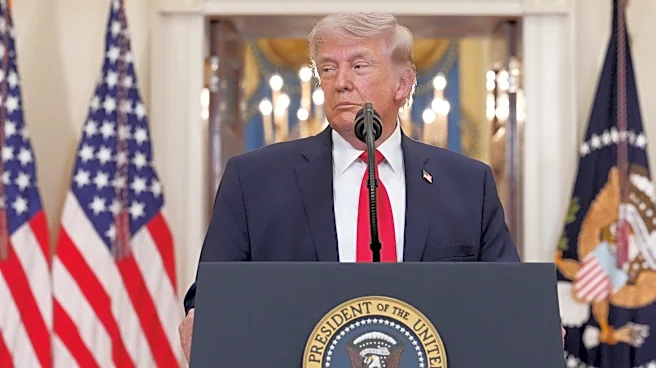
President Donald Trump has issued a new executive order aimed at regulating college sports, particularly focusing on athlete transfers and Name, Image, and Likeness (NIL) collectives. The order, released on the eve of the NCAA men's basketball tournament's
Final Four, directs the NCAA to update its rules by August 1. It suggests limiting athlete transfer movements, capping player eligibility, and implementing funding requirements for women's and Olympic sports. The order also seeks to prohibit NIL collectives, described as 'fraudulent NIL schemes,' and reinstates the NCAA's 'one-time' transfer rule, which courts previously deemed unlawful. The order's enforcement relies on the potential reduction of federal funding to non-compliant universities. However, the order's impact remains uncertain, as previous executive orders by President Trump have faced legal challenges and have been struck down by courts.
Why It's Important?
This executive order could significantly alter the landscape of college sports in the United States. By attempting to regulate athlete transfers and NIL collectives, the order addresses ongoing debates about athlete compensation and movement, which have been contentious issues in college sports. The potential reduction of federal funding for non-compliance could pressure universities to adhere to the new regulations, impacting their financial and operational strategies. Additionally, the order's focus on women's and Olympic sports funding highlights concerns about resource allocation in college athletics. However, the order's legal challenges and the need for congressional legislation to provide a more concrete solution underscore the complexity of implementing such changes. The outcome of this order could influence future policies and the balance of power between athletes, universities, and governing bodies in college sports.
What's Next?
The executive order is expected to face legal challenges, as President Trump himself acknowledged the likelihood of court scrutiny. The NCAA and universities will need to assess the order's implications and prepare for potential changes to their policies and practices. Meanwhile, congressional lawmakers may be pressured to reach an agreement on legislation that addresses the issues raised by the order, such as athlete compensation and antitrust protections. The ongoing negotiations in Congress, particularly the Republican-authored SCORE Act, will be crucial in determining the future regulatory framework for college sports. Additionally, the involvement of presidential committees and stakeholders in studying related issues may inform future legislative efforts. The outcome of these developments will shape the regulatory environment for college sports and the rights and opportunities available to student-athletes.