



What's Happening?
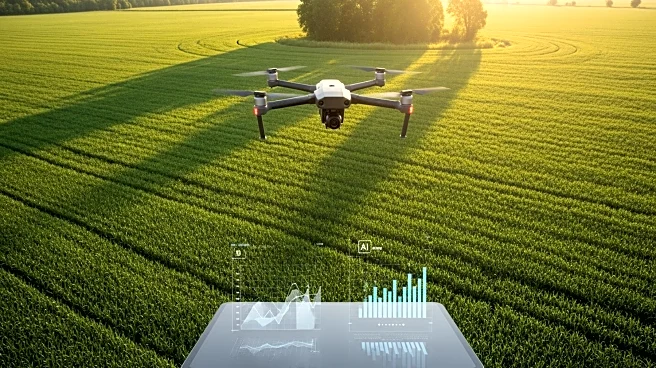
The AI in Agriculture market is anticipated to grow significantly, reaching $15,901.36 million by 2032, according to recent market analysis. This growth is driven by the integration of advanced technologies such as machine learning, computer vision, predictive
analytics, and automation into farming practices. These technologies are being used to enhance productivity and efficiency in agriculture through precision farming, crop monitoring, yield prediction, soil analysis, and livestock management. The market, which was valued at $2,567.54 million in 2024, is expected to grow at a compound annual growth rate (CAGR) of 25.60% from 2025 to 2032. Key players in this market include Microsoft, IBM, Granular Inc., Google LLC, and Deere & Company. Recent developments in the U.S. include the AI in Agriculture Conference hosted by NC State and the USDA's $700 million regenerative agriculture pilot project.
Why It's Important?
The expansion of AI in agriculture is crucial for addressing the challenges of modern farming, such as climate variability, resource optimization, and sustainability. By leveraging AI, farmers can make more informed decisions, optimize resource usage, and reduce environmental impacts, which are essential for enhancing agricultural output and sustainability. This technological integration is expected to transform traditional farming practices, making them more efficient and resilient. The growth of this market also indicates a significant shift towards data-driven farming, which could lead to increased competitiveness and innovation in the agricultural sector. Stakeholders, including farmers, agribusinesses, and technology companies, stand to benefit from improved productivity and reduced operational costs.
What's Next?
As the AI in Agriculture market continues to grow, further advancements in technology and increased adoption of AI tools are expected. Initiatives like the 'Growing with AI' in Washington State and the USDA's pilot project will likely lead to more widespread use of AI in farming. These efforts aim to tackle agricultural challenges and improve farm resilience through AI-driven tools. Additionally, collaborations between tech firms and farmers are expected to intensify, leading to more innovative solutions for precision farming and resource management. The market is also likely to see increased investment in AI technologies, further driving growth and development in the sector.