







What's Happening?
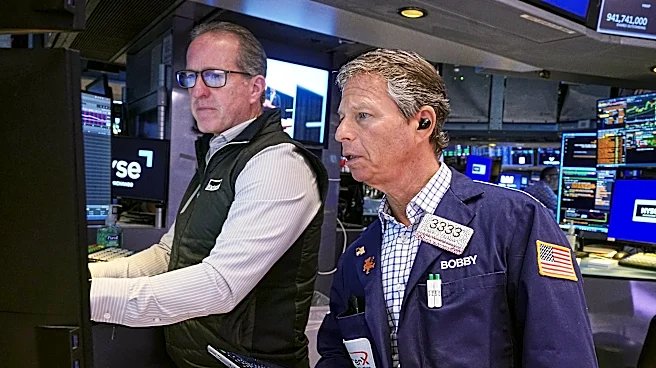
Treasury yields in the United States have decreased as investors remain hopeful about a potential settlement to the ongoing conflict in Iran. Despite the fragile nature of the ceasefire between Washington and Tehran, the yield on the 10-year U.S. Treasury note
fell by more than 1 basis point to 4.477%. Similarly, the 2-year Treasury note yield, which is closely linked to short-term Federal Reserve interest rate policies, dropped over a basis point to 4.035%. The 30-year Treasury bond yield also saw a decline, falling more than a basis point to 5.011%. This movement in yields reflects investor sentiment that a resolution to the conflict may be on the horizon, despite recent U.S. strikes.
Why It's Important?
The decline in Treasury yields is significant as it indicates investor confidence in a potential de-escalation of tensions between the U.S. and Iran. Lower yields suggest that investors are seeking safer assets amid geopolitical uncertainties, which can impact borrowing costs and economic stability. A peaceful resolution to the conflict could stabilize markets and reduce the risk premium associated with geopolitical tensions. This development is crucial for U.S. economic stakeholders, as it could influence Federal Reserve policies and the broader economic outlook.
What's Next?
If the ceasefire holds and progresses into a more permanent peace agreement, it could lead to further stabilization of Treasury yields and potentially lower borrowing costs for the U.S. government. However, continued monitoring of the situation is necessary, as any breakdown in talks or renewed hostilities could reverse the current trend and lead to increased market volatility. Stakeholders, including policymakers and investors, will be closely watching developments in the region.