





What's Happening?
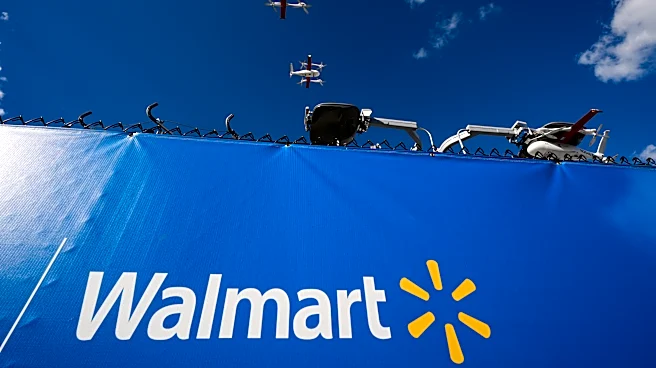
Walmart Inc. experienced a nearly 7% drop in its share price following the release of its first-quarter earnings report. The company reported a revenue of $177.75 billion, surpassing analyst expectations of $174.95 billion, marking a 7.3% increase from
the previous year. Adjusted earnings per share were $0.66, aligning with consensus estimates. Despite strong revenue growth, particularly in e-commerce and advertising, investor sentiment was dampened by Walmart's forward guidance, which fell short of Wall Street expectations. For the second quarter, Walmart projected adjusted earnings per share between $0.72 and $0.74, slightly below the anticipated $0.75. Additionally, the company forecasted revenue of $185.4 billion, which was less than the $186.4 billion expected by analysts. For the full fiscal year 2027, Walmart maintained its adjusted earnings per share guidance of $2.75 to $2.85, with a midpoint of $2.80, compared to the consensus expectation of $2.92.
Why It's Important?
The decline in Walmart's share price highlights the sensitivity of investors to forward guidance, even when current performance exceeds expectations. Walmart's results underscore the challenges faced by large retailers in balancing growth with market expectations. The company's focus on e-commerce and higher-margin segments reflects a strategic shift to adapt to changing consumer behaviors and competitive pressures. However, the cautious outlook suggests potential headwinds, such as inflationary pressures or supply chain disruptions, which could impact future profitability. This development is significant for stakeholders, including investors and market analysts, as it may influence investment strategies and market valuations of retail stocks. Additionally, Walmart's performance and guidance can serve as a barometer for the broader retail sector, providing insights into consumer spending trends and economic conditions.
What's Next?
Walmart's future performance will likely be closely monitored by investors and analysts, particularly in terms of its ability to meet or exceed its guidance. The company's strategic initiatives, such as leveraging technology and automation to enhance productivity and customer experience, will be critical in driving growth. Market reactions to upcoming earnings reports and any adjustments to guidance will be pivotal in determining investor confidence. Additionally, external factors such as economic conditions, consumer sentiment, and competitive dynamics in the retail industry will play a role in shaping Walmart's financial outlook.