



What's Happening?
Mike Schultz, a Paralympian from Minnesota, is not only competing for his fourth Paralympic medal in Italy but is also making significant contributions to adaptive sports. After losing his leg in a snowmobile accident, Schultz turned to adaptive sports and
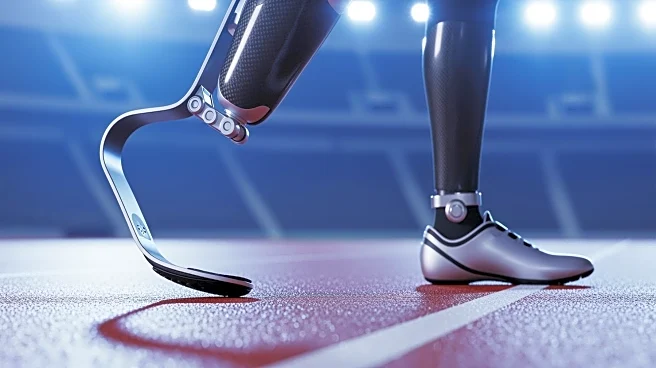
discovered that existing prosthetics were not suitable for high-performance activities. In response, he designed and built his own prosthetic, which has not only enhanced his performance but also benefited his competitors. Schultz's innovation in prosthetic design is helping to elevate the level of competition in Paralympic sports, as he shares his advancements with fellow athletes.
Why It's Important?
Schultz's work is crucial as it addresses a significant gap in the availability of high-performance prosthetics for athletes with disabilities. By creating prosthetics that meet the rigorous demands of competitive sports, Schultz is enabling athletes to perform at their best, potentially leading to more inclusive and competitive Paralympic events. His contributions also highlight the importance of innovation in adaptive technology, which can have far-reaching impacts beyond sports, improving the quality of life for individuals with disabilities. This development underscores the role of athletes as innovators and advocates for change within their communities.
What's Next?
As Schultz continues to compete and innovate, there may be increased interest and investment in adaptive sports technology. His success could inspire other athletes and inventors to pursue similar paths, potentially leading to a broader range of adaptive equipment available in the market. Additionally, Schultz's story may encourage more individuals with disabilities to engage in sports, knowing that there are tailored solutions to meet their needs. The Paralympic community and sports organizations might also look to Schultz's model as a blueprint for supporting athlete-driven innovation.