







What's Happening?
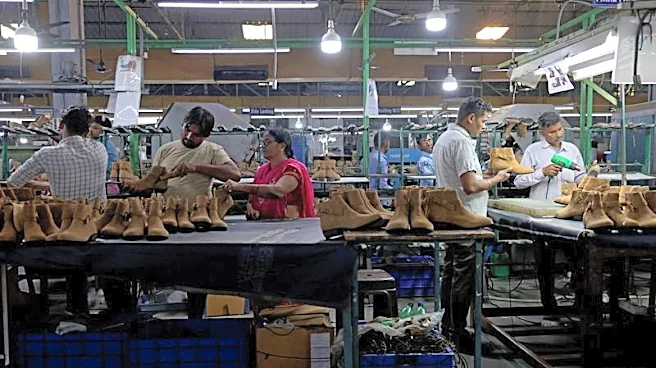
The Rajasthan government, in collaboration with the Centre, is actively promoting the state as a prime location for electronics and semiconductor manufacturing. Union Electronics and IT Minister Ashwini Vaishnaw highlighted Rajasthan's potential to become
a major hub in this sector, citing rapid growth under the leadership of Narendra Modi. The groundwork for approximately 450 factories has been laid, with 75 approved under the Electronic Components Manufacturing Scheme in the past year. Chief Minister Bhajanlal Sharma emphasized the state's progress in the India Semiconductor Mission, supported by a Rs 76,000 crore incentive package. Rajasthan has operationalized its first semiconductor cluster in Bhiwadi, attracting investment proposals worth over Rs 1,200 crore. The state is leveraging its 'triple-S' advantage—silica, skill, and solar—to build a robust ecosystem, offering financial incentives like capital subsidies and interest subventions.
Why It's Important?
This initiative is significant as it positions Rajasthan as a key player in the global semiconductor industry, which is crucial for economic self-reliance and maintaining a balance of power in the digital age. The development of semiconductor manufacturing in Rajasthan is expected to generate large-scale employment and attract substantial investments, boosting the local economy. By establishing itself as a semiconductor hub, Rajasthan can contribute to India's goal of becoming a global leader in electronics manufacturing. The state's strategic policies and incentives are designed to attract both domestic and international investors, potentially transforming regions like the Jodhpur-Pali-Marwar industrial belt into a 'Silicon Valley of Rajasthan'.
What's Next?
The next steps involve the continued development of infrastructure and facilities to support the burgeoning semiconductor industry in Rajasthan. The government is likely to focus on attracting more investors and expanding the existing semiconductor cluster in Bhiwadi. As the industry grows, there will be a need for skilled labor, prompting potential initiatives in education and training to meet this demand. The success of these efforts could encourage other states to adopt similar strategies, further strengthening India's position in the global semiconductor market.