
What's Happening?
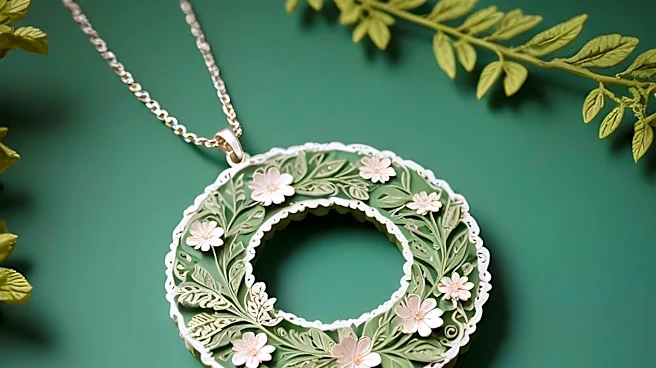
Jewelry designers are witnessing a surge in demand for nature-inspired and culturally rooted motifs, particularly during the Akshaya Tritiya and wedding seasons. Designs featuring peacocks, lotuses, mangoes
(paisley), and elephants are gaining popularity not only for their aesthetic appeal but also for their symbolic meanings. The peacock motif, in particular, is favored for its representation of grace and beauty, while the lotus and paisley are associated with fertility and abundance. This trend is being driven by celebrity influence, with high-profile weddings showcasing elaborate gold jewelry and traditional motifs. Designers like Archana Aggarwal and Ravi Bamalwa note that craftsmanship plays a crucial role in the appeal of these motifs, with genuine skill making a significant difference in the final product.
Why It's Important?
The growing interest in motif-led jewelry reflects a broader cultural shift towards heritage and tradition in fashion. This trend is not limited to bridal markets but is expanding to include men and working women who are incorporating these designs into their personal wardrobes. The influence of celebrities in popularizing these motifs highlights the aspirational nature of traditional designs, making them desirable across different demographics. This shift could lead to increased business for jewelers who specialize in these motifs, as well as a renewed appreciation for traditional craftsmanship in the jewelry industry.
What's Next?
As the demand for motif-led jewelry continues to rise, jewelers may expand their offerings to include a wider range of products featuring these designs. The trend could also inspire new collaborations between designers and celebrities, further boosting the visibility and desirability of traditional motifs. Additionally, as more consumers seek out meaningful and symbolic jewelry pieces, there may be a greater emphasis on storytelling and cultural significance in marketing strategies.
Beyond the Headlines
The resurgence of interest in traditional motifs could have deeper cultural implications, reflecting a desire to connect with heritage and identity through fashion. This trend may also encourage a reevaluation of the role of jewelry in personal expression, moving beyond mere decoration to become a symbol of personal values and beliefs. As consumers increasingly seek out pieces with cultural significance, there may be a shift towards more sustainable and ethically sourced materials in the jewelry industry.