




What's Happening?
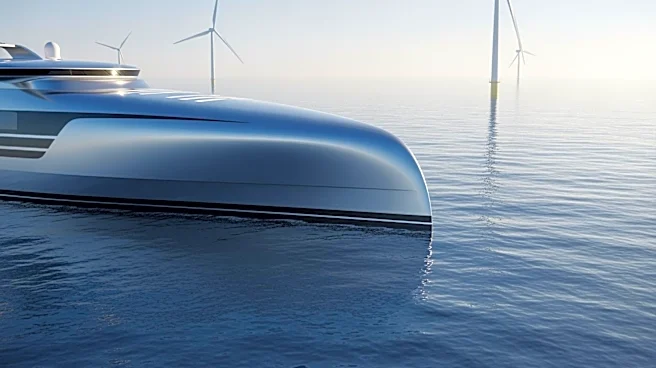
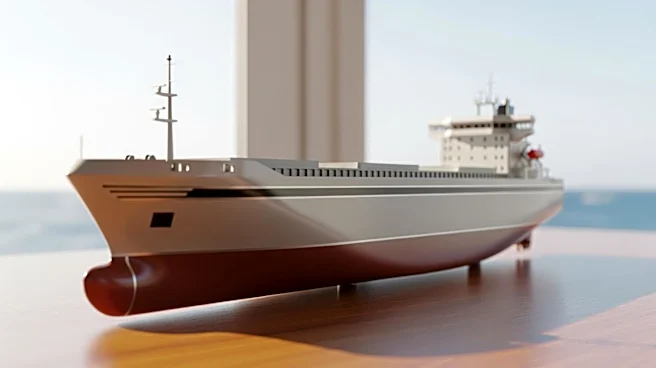
Compute Maritime, in collaboration with partners including Siemens Digital Industries Software and the University of Southampton, has developed a next-generation crew transfer vessel (CTV) for the offshore wind sector. This vessel, designed using Compute Maritime's
NeuralShipper AI platform, significantly reduces fuel consumption and CO2 emissions. The 32.5-meter twin-hull CTV, capable of carrying 24 technicians and four crew members, achieves an 11.1% reduction in annual fuel consumption and an 8.9% reduction in CO2 emissions compared to conventional diesel vessels. The AI-optimized hull form and a diesel-electric hybrid propulsion system contribute to these savings. The project, funded by the UK Government, aligns with the UK's 2025 Maritime Decarbonisation Strategy, aiming for substantial emissions reductions in the maritime sector.
Why It's Important?
The development of this AI-designed vessel represents a significant advancement in maritime technology, particularly for the offshore wind sector. By reducing fuel consumption and emissions, the vessel supports global efforts to combat climate change and aligns with decarbonization goals. The project highlights the potential of AI and additive manufacturing in creating more efficient and sustainable maritime solutions. As the offshore wind industry expands, such innovations are crucial for reducing the environmental impact of maritime operations. The vessel's design also allows for future upgrades, enabling a shift from diesel to battery power as infrastructure develops, further enhancing its environmental benefits.
What's Next?
The vessel is designed to be future-proof, with the capability to integrate with offshore fast-charging infrastructure as it becomes available. This adaptability ensures that the vessel can transition to more sustainable energy sources over its 25-year service life. The project's success may encourage further investment in AI and additive manufacturing technologies within the maritime industry, potentially leading to broader adoption of similar innovations. As the UK and other countries pursue aggressive decarbonization targets, the development and deployment of such vessels could play a critical role in achieving these goals.
Beyond the Headlines
The project underscores the growing importance of integrating AI and advanced manufacturing techniques in traditional industries. By incorporating production constraints into the design process, the project demonstrates a seamless transition from AI-generated designs to production-ready components. This approach not only enhances efficiency but also reduces the need for rework, saving time and resources. The vessel's design also reflects a broader trend towards modular and upgradeable platforms, which can adapt to evolving technological and environmental standards, ensuring long-term sustainability and compliance.