
What's Happening?
RINA, a global leader in ship classification and consulting engineering, has entered into a Memorandum of Understanding (MOU) with Hanwha Group to promote the adoption of advanced battery hybrid propulsion
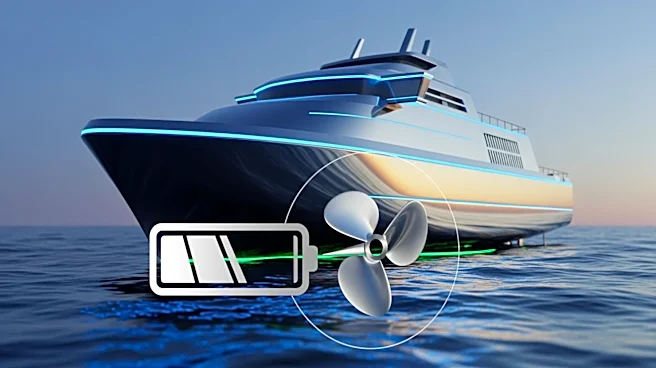
systems in the maritime industry. This collaboration focuses on the Ro-Ro ferry segment, aiming to transition from traditional internal combustion engines to hybrid battery solutions. Hanwha Power Systems will lead the project, integrating Hanwha Aerospace's marine Energy Storage System and Hanwha Engine's propulsion technologies. The partnership seeks to enhance safety, reliability, and fuel efficiency while reducing carbon emissions. RINA will provide regulatory compliance and certification expertise, ensuring the project's technical soundness.
Why It's Important?
This partnership is significant as it addresses the maritime sector's need to reduce carbon emissions and meet decarbonization targets. By leveraging Hanwha's technological capabilities and RINA's regulatory expertise, the collaboration aims to deliver scalable and efficient hybrid propulsion solutions. This initiative could set a precedent for future maritime projects, encouraging the industry to adopt eco-friendly technologies. The transition to battery-hybrid systems not only supports environmental goals but also positions Hanwha and RINA as leaders in the global market for eco-friendly vessels, potentially influencing industry standards and practices.
What's Next?
The collaboration will focus on developing and certifying the hybrid propulsion systems, with RINA playing a crucial role in ensuring compliance with maritime regulations. As the project progresses, it is expected to influence market trends in the ferry segment, potentially leading to wider adoption of hybrid technologies across the maritime industry. Stakeholders, including shipbuilders and operators, may respond by investing in similar technologies to remain competitive and compliant with environmental regulations. The success of this initiative could also prompt further collaborations between technology providers and regulatory bodies.