



What's Happening?
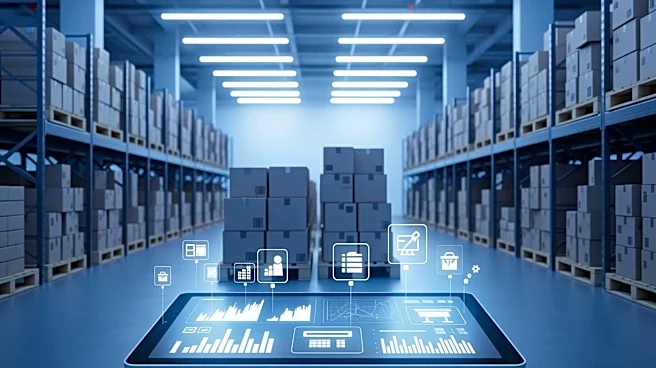
Retailers are increasingly adopting technology to tackle physical store challenges such as wasted labor, stock accuracy, and service efficiency. According to a recent article, investments in electronic shelf labels and smart carts are transforming store operations.
Co-op and Waitrose are implementing electronic shelf labels to improve pricing accuracy and reduce manual labor, while Carrefour Israel is deploying smart carts to enhance customer experience and operational efficiency. These technological advancements aim to create more responsive and efficient stores, addressing fundamental tensions in retail environments.
Why It's Important?
The integration of technology in physical retail is crucial for improving operational efficiency and customer experience. By addressing issues like labor costs and stock accuracy, retailers can enhance service delivery and reduce operational costs. This shift is significant as it aligns physical retail with digital advancements, potentially increasing profitability and customer satisfaction. The adoption of smart carts and electronic shelf labels represents a strategic move to optimize store operations, making them more competitive in a rapidly evolving retail landscape.
What's Next?
Retailers are likely to continue investing in technology to further enhance store operations and customer experience. As these technologies prove effective, more retailers may adopt similar solutions, leading to widespread changes in the retail industry. The focus will be on integrating technology that offers multiple benefits, such as improved efficiency and customer engagement. Retailers will need to assess the impact of these technologies on their operations and make strategic decisions to maximize their benefits.