



What's Happening?
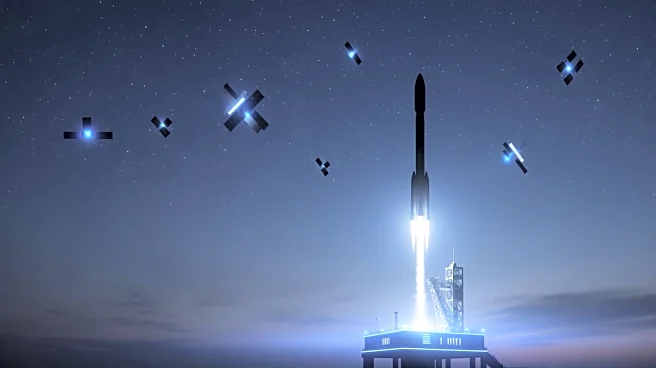
SpaceX successfully launched 29 Starlink internet satellites on its third mission of 2026. The launch took place from Florida's Cape Canaveral Space Force Station on January 9, 2026, at 4:41 p.m. EST. The Falcon 9 rocket, carrying the satellites, achieved a successful liftoff and the first stage of the rocket landed in the Atlantic Ocean on the drone ship 'Just Read the Instructions' approximately 8.5 minutes after launch. This marked the 29th launch and landing for this particular booster. The upper stage of the Falcon 9 deployed the satellites into low Earth orbit about 65 minutes post-liftoff. Starlink, SpaceX's satellite constellation, is the largest ever assembled, with over 9,400 active satellites. The company had a busy 2025, launching
165 orbital missions, with nearly three-quarters dedicated to Starlink.
Why It's Important?
The successful deployment of 29 additional Starlink satellites underscores SpaceX's commitment to expanding its satellite internet service. This expansion is significant for global internet connectivity, particularly in remote and underserved areas. The continued growth of the Starlink constellation enhances SpaceX's ability to provide high-speed internet access worldwide, potentially transforming digital communication and access. The mission also highlights SpaceX's operational efficiency and reliability in space launches, reinforcing its position as a leader in the commercial space industry. The frequent launches contribute to the company's goal of providing comprehensive global internet coverage, which could have substantial economic and social impacts by bridging the digital divide.
What's Next?
SpaceX is expected to continue its aggressive launch schedule throughout 2026, further expanding the Starlink network. The company aims to increase the number of active satellites, enhancing service quality and coverage. Future missions will likely focus on maintaining and upgrading the satellite constellation to improve internet speeds and reliability. As the network grows, regulatory and competitive challenges may arise, particularly concerning space traffic management and spectrum allocation. Stakeholders, including governments and telecommunications companies, will be closely monitoring SpaceX's progress and its implications for global internet infrastructure.