
What's Happening?
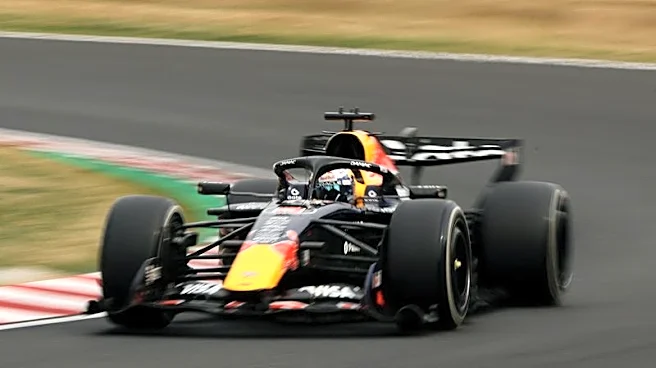
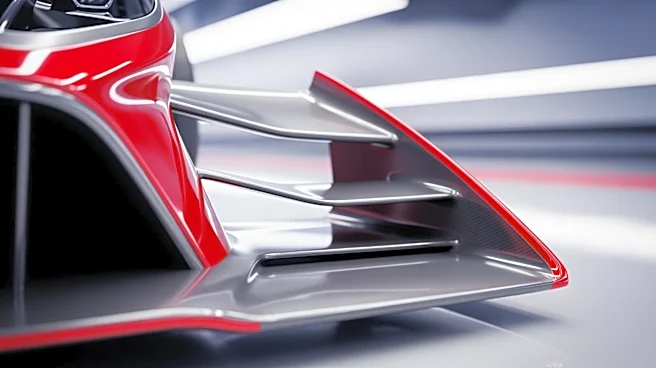
Red Bull Racing has unveiled a significant upgrade to its front wing design at the Miami Grand Prix, marking a notable shift in their aerodynamic strategy. The new design features the largest diveplane
among Formula 1 teams, a change from their previous setup which lacked such components. This development comes in response to the 2026 Formula 1 regulations that allow for a winglet on the outside of the front wing endplate. While teams like Mercedes and McLaren have already adopted wider sculpted designs, Red Bull and Ferrari had previously opted for simpler configurations. The new Red Bull front wing is designed to enhance aerodynamic efficiency by increasing downforce while minimizing drag. This is achieved by optimizing the airflow around the front tires, reducing lift, and improving the overall aerodynamic package.
Why It's Important?
The introduction of this new front wing design by Red Bull is significant as it reflects the ongoing technological arms race in Formula 1, where teams continuously seek to gain competitive advantages through aerodynamic innovations. By enhancing downforce and reducing drag, Red Bull aims to improve their car's performance, particularly in high-speed circuits. This development could potentially shift the competitive balance in the championship, as aerodynamic efficiency is crucial for race success. Teams that can effectively implement such upgrades may gain a strategic edge, impacting race outcomes and championship standings. The move also underscores the importance of adapting to regulatory changes, as teams must innovate within the constraints of the new rules to maintain competitiveness.
What's Next?
As the season progresses, other teams are likely to respond to Red Bull's advancements by introducing their own aerodynamic upgrades. This could lead to a series of iterative developments as teams strive to optimize their cars under the new regulations. The effectiveness of Red Bull's new front wing will be closely monitored in upcoming races, providing insights into its impact on performance. Additionally, the FIA may review the implications of these aerodynamic changes to ensure compliance with safety and competition standards. The ongoing development race will continue to be a focal point of the 2026 Formula 1 season, with teams balancing innovation and regulation adherence.