



What's Happening?
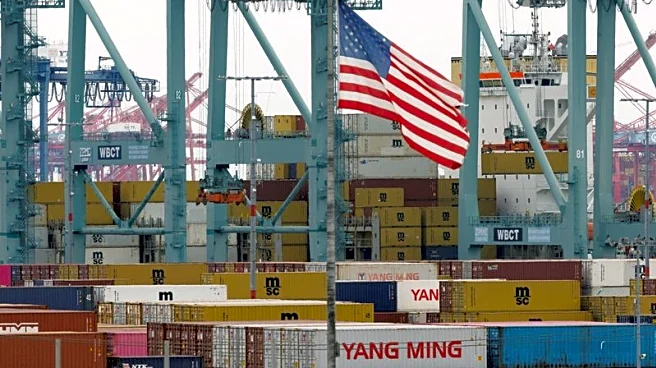
The U.S. has implemented a universal baseline tariff, raising the average import tax to 13%, the highest in 90 years. This policy shift, driven by the Trump administration, aims to reshore manufacturing and reduce reliance on foreign imports. The increased tariffs have led to higher costs for businesses, affecting profit margins and growth forecasts. Key sectors such as automotive and technology are experiencing significant impacts, with companies like Toyota and Apple facing increased costs. The tariffs have also prompted retaliatory measures from trading partners, affecting U.S. exporters.
Why It's Important?
The rise in tariffs represents a major shift in U.S. trade policy, moving towards protectionism. This has significant implications for the global economy,
as it disrupts supply chains and increases costs for businesses and consumers. The tariffs are expected to slow U.S. GDP growth and reduce consumer spending, impacting sectors like consumer staples. The policy also signals a departure from decades of free trade agreements, potentially leading to long-term changes in global trade dynamics and economic relationships.
What's Next?
The market will closely watch the Federal Reserve's response to the economic impact of the tariffs. Companies may need to adapt by reshoring production or accepting lower margins. The potential for further tariff increases or retaliatory measures from other countries could exacerbate economic challenges. Investors will monitor corporate earnings reports for signs of how businesses are managing the increased costs and supply chain disruptions.