

What's Happening?
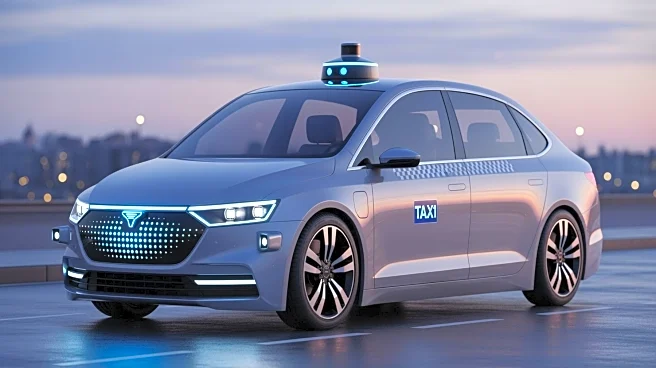
Deutsche Bank analysts have identified Uber as a potential major beneficiary in the autonomous vehicle (AV) market. The analysts, led by Benjamin Black, emphasize Uber's strategic partnership with Nvidia as a key factor in its favorable position. This
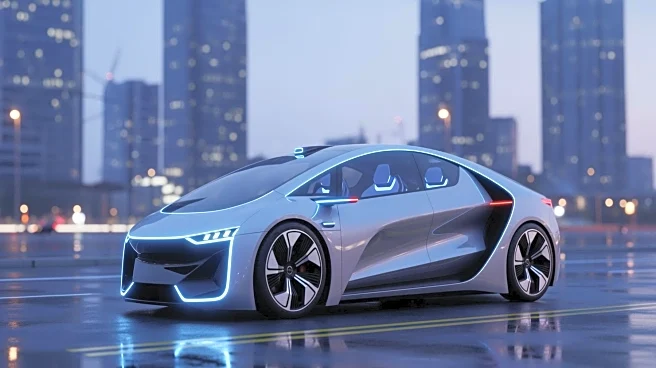
collaboration is expected to facilitate the deployment of Level 4 (L4) robotaxis, which are fully autonomous vehicles, in cities like San Francisco and Los Angeles by early 2027, with further expansion planned. The analysts argue that Uber's role as a global aggregator of mobility demand positions it well to capitalize on the growing AV ecosystem, which is increasingly centered around Nvidia's technology. This development counters the narrative of a single-player dominance in the AV market, suggesting a more diversified landscape.
Why It's Important?
The significance of this development lies in the potential transformation of the ride-hailing industry and the broader transportation sector. Uber's strategic positioning could lead to substantial growth opportunities as the AV market expands. By leveraging Nvidia's technology, Uber can enhance its service offerings without the need to manufacture its own vehicles, thus reducing capital expenditure. This positions Uber to potentially capture a significant share of the AV market, which is expected to grow as more manufacturers adopt autonomous technologies. The move could also influence investor sentiment, as Deutsche Bank has set a 12-month price target of $108 per share for Uber, indicating a 38% upside from its current price.
What's Next?
Looking ahead, Uber and Nvidia's partnership will likely focus on the successful deployment of L4 robotaxis in key markets. This will involve navigating regulatory landscapes and ensuring the technology meets safety standards. The expansion of AV services could prompt responses from competitors like Tesla and Waymo, who are also active in the autonomous driving space. Additionally, Uber's ability to monetize its AV services effectively will be crucial in maintaining its competitive edge. Stakeholders will be watching closely to see how Uber's strategy unfolds and whether it can sustain its growth trajectory in the evolving AV market.