






What's Happening?
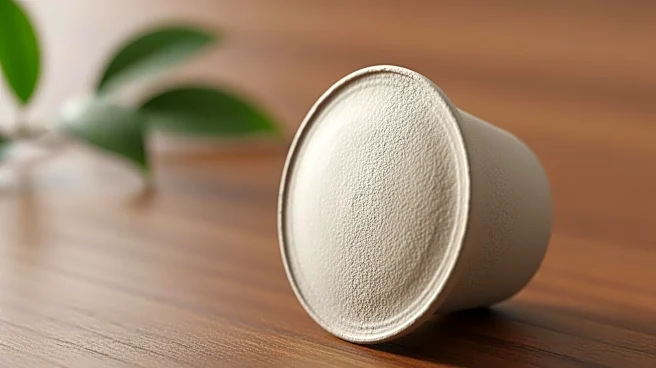
Lavazza, the Italian coffee company, has launched a new sustainable coffee pod system in North America. The product, named Tabli, is a solid coffee tab made entirely from compressed coffee, eliminating the need for plastic capsules, individual wrapping,
or coatings. This innovation follows five years of research and development, resulting in over 15 patents. The Tabli pods are designed to expand during brewing, creating a rich foam known as 'Crema Plus.' The accompanying coffee machine, designed in Italy, simplifies the brewing process by requiring no setup, grinding, or measuring. Lavazza's launch of Tabli is part of its strategy to expand its presence in the dynamic U.S. market, which the company views as a significant opportunity for growth.
Why It's Important?
The introduction of Lavazza's Tabli system represents a significant step towards sustainability in the coffee industry, which has been criticized for its environmental impact due to plastic waste from traditional coffee pods. By eliminating plastic, Lavazza addresses consumer demand for eco-friendly products and aligns with broader environmental goals. This move could influence other companies in the industry to adopt similar sustainable practices, potentially reducing the overall environmental footprint of coffee consumption. Additionally, Lavazza's focus on the U.S. market underscores the country's importance as a key growth area for international brands, highlighting the competitive landscape and the need for innovation to capture market share.
What's Next?
Lavazza plans to make the Tabli system available for preorder in North America, with individual tabs priced between $0.70 and $1.15. The company is offering a launch bundle that includes the Tabli machine, a milk frother, and a variety of tabs at a discounted price. As Lavazza continues to expand its presence in the U.S., it may face competition from other coffee brands that are also seeking to innovate and capture environmentally conscious consumers. The success of the Tabli system could lead to further product developments and collaborations aimed at enhancing sustainability in the coffee industry.