






What's Happening?
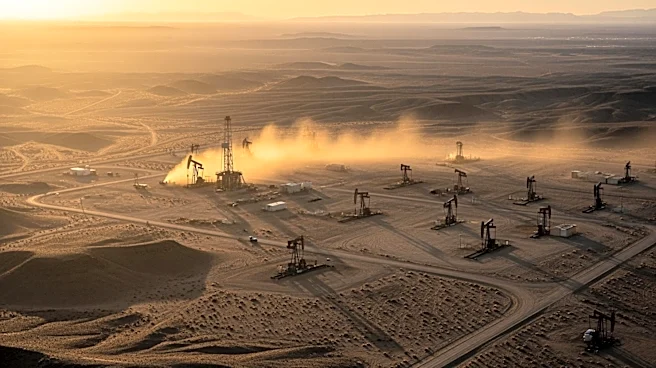
The Permian Basin, a significant contributor to U.S. energy production, is bolstering economic growth and job creation across the nation. According to recent reports by the Permian Strategic Partnership (PSP), the basin currently supports over 940,000
jobs nationwide and is projected to increase this number to approximately 1.16 million by 2050. The basin accounts for more than 44% of active drilling rigs in the U.S. and is expected to generate around $366 billion in gross product impact by 2050. Additionally, it contributed an estimated $114 billion to the U.S. balance of trade in 2025. The PSP, a coalition of 25 energy companies and two university systems, has invested $215 million in regional initiatives since 2019, enhancing education, healthcare, workforce development, and transportation safety across 22 counties in West Texas and southeast New Mexico.
Why It's Important?
The Permian Basin's role in the U.S. energy sector is pivotal, not only for its substantial contribution to oil production but also for its economic impact. By supporting nearly a million jobs and contributing billions to the economy, the basin is a cornerstone of U.S. energy security and economic stability. The investments made by the PSP in local communities underscore the importance of regional development in sustaining long-term economic growth. These efforts are crucial for maintaining the vitality of the U.S. energy sector, which is a significant driver of national economic health. The projected increase in job support and economic output highlights the basin's potential to further enhance U.S. energy independence and economic resilience.
What's Next?
Looking ahead, the Permian Basin is expected to continue its trajectory of growth, with projections indicating it will account for nearly half of U.S. oil production by 2027. The ongoing investments in community and workforce development by the PSP are likely to yield further economic benefits, enhancing the quality of life in the region and supporting the broader U.S. economy. As the basin's output increases, it may also influence national energy policies and strategies, potentially leading to more robust support for domestic energy production and infrastructure development. Stakeholders, including policymakers and industry leaders, will likely focus on maximizing the basin's contributions while addressing environmental and sustainability concerns.