

What's Happening?
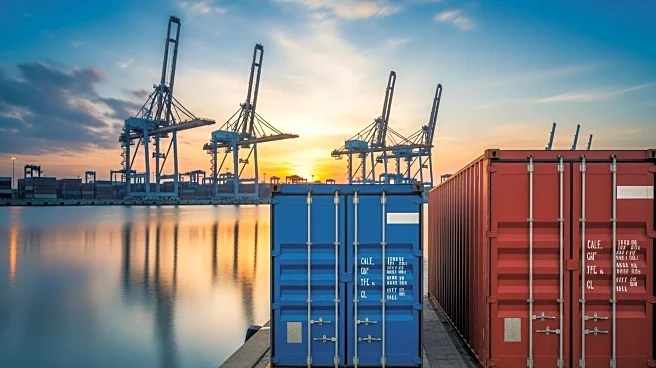
The Panama Canal and the U.S. Grains & BioProducts Council (USGBC) have signed a Memorandum of Understanding (MOU) aimed at enhancing global trade involving U.S. agricultural products. This agreement focuses on strengthening collaboration through joint market efforts, economic analysis, and the sharing of trade and logistical data. The partnership is expected to support the growing international demand for U.S. grains while promoting the operational excellence of the Panama Canal. The signing ceremony was attended by the U.S. Ambassador to Panama, Kevin Marino Cabrera, who emphasized the strategic importance of the Panama Canal for both bilateral and global trade. The canal is a vital link in the global supply chain, facilitating the export
of several million tons of U.S. agricultural products annually, with grain traffic alone accounting for approximately 25.1 million metric tons in fiscal year 2025.
Why It's Important?
This MOU is significant as it underscores the strategic role of the Panama Canal in facilitating U.S. agricultural exports, which are crucial for the U.S. economy. By enhancing collaboration with the USGBC, the Panama Canal can improve its operational efficiency and capacity to handle increased trade volumes. This partnership is likely to benefit U.S. farmers and agricultural exporters by providing them with more reliable and efficient trade routes, potentially leading to increased export opportunities and revenue. Additionally, the agreement highlights the importance of international cooperation in maintaining and enhancing global trade networks, which are vital for economic growth and stability.
What's Next?
Following the signing of the MOU, the Panama Canal and USGBC are expected to begin implementing the agreed-upon initiatives, such as conducting joint economic analyses and sharing logistical data. These efforts will likely involve close coordination between the two entities to ensure that the objectives of the MOU are met. The success of this partnership could lead to further agreements and collaborations aimed at enhancing trade efficiency and capacity. Stakeholders, including U.S. agricultural producers and exporters, will be closely monitoring the outcomes of this collaboration to assess its impact on trade flows and market access.