
What's Happening?
A Chicago sports talk radio host, Laurence Holmes, has sparked controversy by labeling New York Knicks fans as the 'most obnoxious' in American sports. This comment was made during a broadcast on 104.3
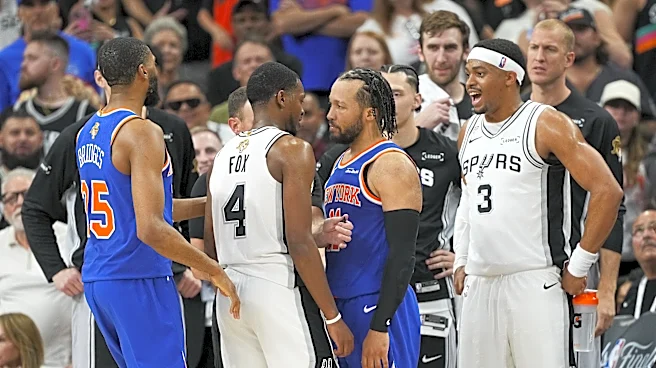
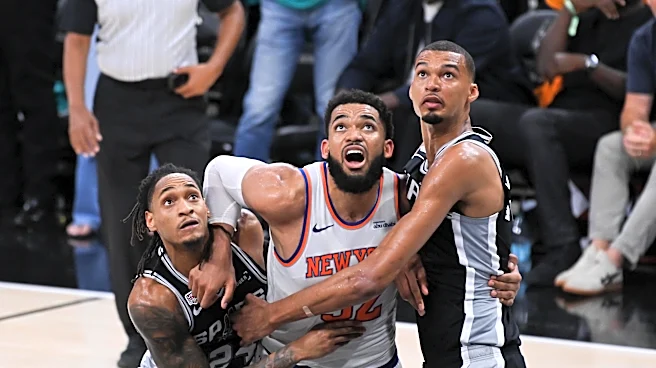
The Score, where Holmes discussed the fervent nature of Knicks supporters. The Knicks, currently leading the NBA Finals 2-0 after victories in San Antonio, have a passionate fan base often described as 'long-suffering' due to the team's historical performance. Holmes' remarks have drawn attention, especially given the historical rivalry between the Chicago Bulls and the Knicks, dating back to the 1990s. Co-host Matt Spiegel disagreed with Holmes, suggesting that other fan bases, such as those of the St. Louis Cardinals, could also be considered for the title of 'most obnoxious.' The discussion reflects the intense loyalty and sometimes contentious reputation of sports fans across the United States.
Why It's Important?
The comments by Laurence Holmes highlight the cultural significance and emotional investment associated with sports fandom in the United States. Knicks fans, known for their unwavering support despite the team's lack of recent championships, exemplify the deep-rooted loyalty that sports teams inspire. This incident underscores the broader societal role of sports as a unifying yet divisive force, capable of sparking heated debates and strong opinions. The discussion also touches on the historical rivalries that shape fan identities and contribute to the vibrant tapestry of American sports culture. Such rivalries not only fuel fan engagement but also drive media narratives and public discourse, influencing perceptions of teams and their supporters.
What's Next?
As the NBA Finals progress, the spotlight on Knicks fans is likely to intensify, especially if the team continues its successful run. The outcome of the finals could either validate or challenge Holmes' characterization of Knicks fans, depending on their behavior and the team's performance. Media coverage and public reactions will continue to shape the narrative around this controversy, potentially influencing how other fan bases are perceived. Additionally, the conversation may prompt further discussions about sportsmanship and the role of media in shaping fan reputations. Stakeholders, including team management and fan organizations, might engage in efforts to address or capitalize on the publicity generated by such debates.