





What's Happening?
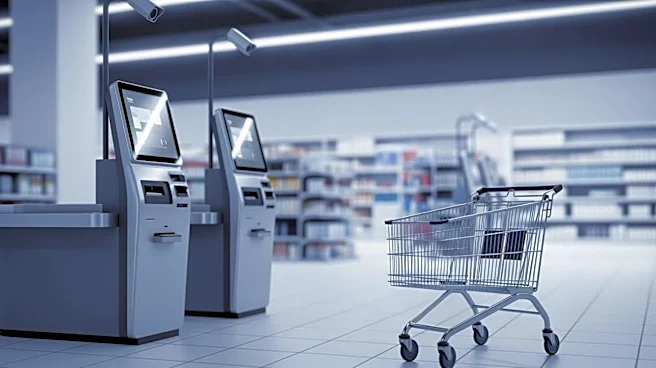
RFID self-checkout machines are transforming the retail landscape by offering a more efficient and customer-friendly checkout experience. These machines utilize radio frequency identification technology to read multiple tagged items simultaneously, allowing
for a complete purchase tally without the need for individual barcode scanning. This technology addresses the persistent issue of long checkout queues, which often lead to customer abandonment, while also reducing the need for multiple cashier lanes, thus preserving retailer margins. The adoption of RFID self-checkout systems is becoming a competitive necessity as labor costs rise and consumer expectations for seamless shopping experiences increase. The market for these systems is projected to grow significantly, with a forecasted value of USD 1.15 billion by 2032, driven by factors such as the post-pandemic shift towards contactless retail and decreasing costs of RFID tags.
Why It's Important?
The implementation of RFID self-checkout machines is crucial for retailers aiming to enhance customer satisfaction and operational efficiency. By eliminating the need for line-by-line scanning, these systems significantly reduce checkout times, which is a critical factor in improving the shopping experience and reducing queue abandonment. As labor costs continue to rise, the ability to maintain service levels without increasing staffing costs is a major advantage. Furthermore, the technology supports the growing consumer demand for contactless and frictionless shopping experiences, which have become more pronounced in the wake of the COVID-19 pandemic. Retailers that adopt this technology can expect to see improvements in customer loyalty and operational efficiency, positioning themselves favorably in a competitive market.
What's Next?
As the market for RFID self-checkout machines expands, retailers are likely to continue investing in this technology to stay competitive. Major retailers such as Decathlon and Zara have already committed to fully implementing RFID-enabled checkouts by 2028. Additionally, government initiatives in regions like China and the EU are promoting retail digitalization, which will further accelerate the adoption of these systems. The continued reduction in RFID tag costs and advancements in technology, such as AI-powered tag conflict resolution, will likely enhance the performance and affordability of these systems, making them accessible to a broader range of retailers, including small and medium enterprises.