







What's Happening?
SpaceX is gradually reducing the frequency of its Falcon 9 rocket launches as it shifts focus to the larger Starship rocket. This transition is part of SpaceX's strategy to enable more ambitious space missions, including lunar and Martian exploration,
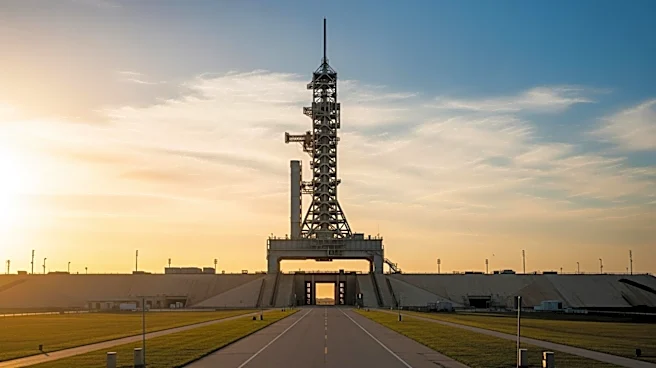
as well as the development of orbital data centers and next-generation Starlink satellites. The company has been modifying its launch sites, such as Launch Complex-39A at Kennedy Space Center, to accommodate Starship launches. While Falcon 9 launches are decreasing, SpaceX continues to utilize the Falcon Heavy for certain missions. The company is also constructing a second Starship factory at Kennedy Space Center, aiming to commence Starship flights from Florida before the factory becomes operational.
Why It's Important?
The shift from Falcon 9 to Starship represents a significant evolution in SpaceX's capabilities and ambitions. By focusing on the Starship, SpaceX aims to expand its role in space exploration, potentially leading to groundbreaking missions to the Moon and Mars. This transition could also impact the commercial space industry by setting new standards for payload capacity and mission scope. The development of Starship may influence global space policies and inspire increased investment in space technologies. Additionally, the move could affect SpaceX's financial dynamics, as the company balances the costs of developing and launching a new class of rockets with the potential revenue from expanded mission capabilities.
What's Next?
SpaceX plans to begin Starship flights from Florida, even as construction of a new factory at Kennedy Space Center is underway. The company is expected to continue modifying its launch infrastructure to support Starship operations. As SpaceX progresses with its Starship program, stakeholders in the aerospace industry, including competitors and government agencies, will likely monitor the developments closely. The success of Starship could lead to new partnerships and contracts, particularly for missions involving lunar and Martian exploration. Additionally, SpaceX's advancements may prompt regulatory bodies to update policies related to space travel and exploration.