



What's Happening?
At the 98th Academy Awards, Autumn Durald Arkapaw became the first woman to win the Oscar for cinematography for her work on the film 'Sinners'. Her victory was met with a standing ovation in the press room, highlighting the significance of her achievement
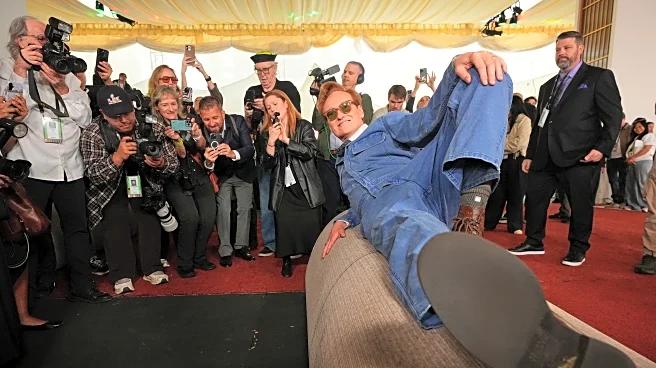
in a traditionally male-dominated field. Arkapaw expressed her gratitude, emphasizing the importance of representation and the opportunities provided by director Ryan, who allowed women on the film to lead and excel in their roles. The ceremony, hosted by Conan O'Brien, was noted for its smooth execution and moments of camaraderie among attendees, including interactions between nominees and winners during commercial breaks.
Why It's Important?
Arkapaw's win is a landmark moment for gender equality in the film industry, particularly in technical categories where women have been historically underrepresented. Her achievement not only breaks barriers but also serves as an inspiration for aspiring female cinematographers. This recognition could encourage more inclusive hiring practices and foster a more diverse creative environment in Hollywood. The broader impact of such milestones can lead to increased visibility and opportunities for women in various roles within the entertainment industry, potentially influencing public policy and industry standards regarding gender equality.
What's Next?
Following Arkapaw's historic win, there may be increased advocacy for gender diversity in film production roles. Industry stakeholders, including studios and guilds, might implement initiatives to support and mentor women in technical fields. Additionally, Arkapaw's success could inspire other award ceremonies to recognize and celebrate diversity in their nominations and winners. The ongoing dialogue about representation in Hollywood is likely to gain momentum, with potential policy changes aimed at promoting inclusivity and equal opportunities across the industry.
Beyond the Headlines
Arkapaw's victory highlights the cultural shift towards recognizing and valuing diverse voices in storytelling. It underscores the importance of mentorship and support from industry leaders in creating pathways for underrepresented groups. This development may also influence educational institutions to focus on diversity in their film programs, preparing a new generation of filmmakers who reflect a broader range of perspectives. The long-term impact could lead to more authentic and varied narratives in cinema, enriching the cultural landscape.