


What's Happening?
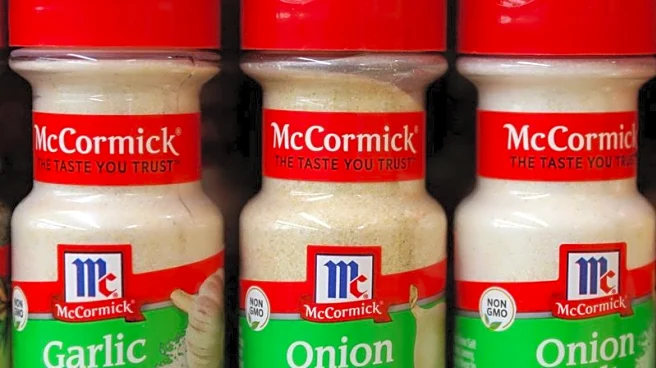
Unilever is in advanced discussions to merge its food business with McCormick, a deal that could create a $60 billion company. The transaction is expected to be structured as a Reverse Morris Trust, which provides tax benefits. Unilever plans to spin
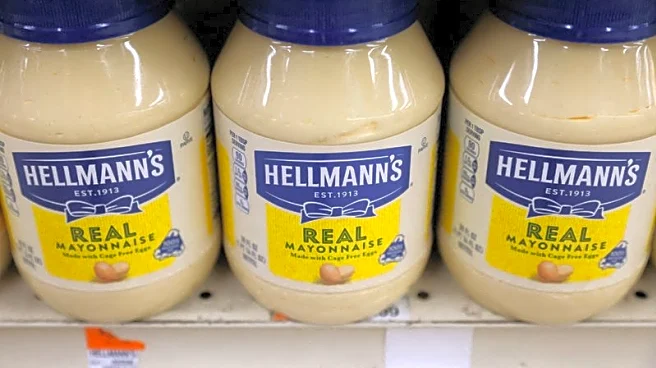
off its food division and merge it with McCormick, with Unilever and its shareholders retaining a 65% stake in the new entity. The merger aligns with Unilever's strategy to focus more on beauty and personal care, while McCormick would gain a significant expansion into condiments and pantry staples. The deal could be finalized soon, although it is not yet certain. Unilever's food business, which includes brands like Hellmann’s and Knorr, has seen slower sales growth compared to its personal goods and beauty segments.
Why It's Important?
The merger represents a strategic shift for Unilever, allowing it to concentrate on higher-growth areas while providing McCormick with a broader product range and stronger global presence. This move could significantly impact the food industry by creating a major player with enhanced market power and distribution capabilities. For investors, the deal offers potential synergies and cost efficiencies, although details on these aspects are still awaited. The merger also reflects broader industry trends where companies are divesting non-core assets to focus on more profitable segments. The transaction could influence market dynamics, potentially leading to further consolidation in the food sector.
What's Next?
If the merger proceeds, stakeholders will be keen to see how the combined entity leverages its expanded portfolio to drive growth. Analysts and investors will be looking for detailed plans on achieving synergies and managing costs. The deal's completion could prompt reactions from competitors, possibly leading to more mergers and acquisitions in the industry. Additionally, Unilever's ongoing cost-cutting measures and global hiring freeze, influenced by geopolitical tensions, may affect the company's operations and investor sentiment in the short term.
Beyond the Headlines
The merger highlights the challenges traditional food companies face as consumer preferences shift towards fresh and health-conscious options. The rise of weight loss drugs and competition from private label brands have pressured packaged food sales, prompting companies like Unilever to reevaluate their portfolios. This strategic pivot could set a precedent for other companies in the sector, emphasizing the need to adapt to changing market conditions and consumer demands.