



What's Happening?
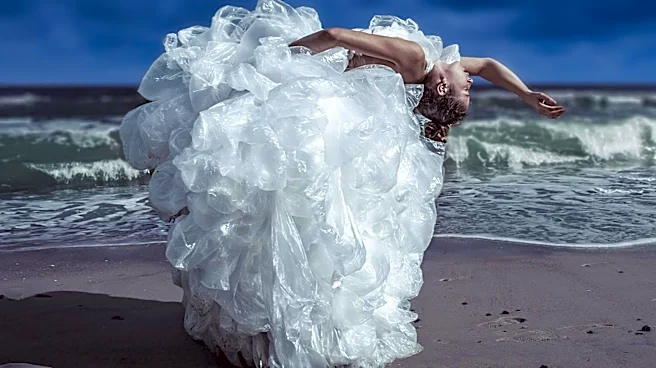
Lara Peters, a 42-year-old bride from the Netherlands, opted for a second-hand wedding dress for her marriage ceremony held at Utrecht rail station. The dress was sourced from 'Free Fashion', a Dutch foundation dedicated to recycling clothing to combat
waste. Peters and her husband, Mathijs Dordregter, chose sustainability as the theme for their wedding, aligning with their commitment to environmental conservation. The event was organized with the help of Free Fashion, which advocates for sustainable practices in weddings to reduce over-consumption and its environmental impact. The foundation highlights that producing a wedding dress can have a carbon footprint equivalent to driving 250 kilometers by car. With 17,000 weddings annually in the Netherlands, the cumulative emissions from wedding dresses are significant. Free Fashion encourages couples to consider sustainable options for their weddings, promoting the reuse of clothing and other eco-friendly practices.
Why It's Important?
The choice of a recycled wedding dress by Lara Peters underscores a growing trend towards sustainability in personal and social events. This movement is crucial in addressing the environmental challenges posed by over-consumption and waste. By choosing second-hand attire, Peters and Dordregter are setting an example for others to follow, potentially influencing a shift in consumer behavior towards more sustainable practices. The initiative by Free Fashion to promote recycled clothing at weddings highlights the broader need for a circular economy, where resources are reused and recycled to minimize environmental impact. This approach not only reduces waste but also conserves resources, contributing to global efforts to combat climate change. As more individuals and organizations adopt sustainable practices, there is potential for significant reductions in carbon emissions and environmental degradation.
What's Next?
The success of this sustainable wedding could inspire more couples to consider eco-friendly options for their ceremonies. Free Fashion and similar organizations may see increased demand for their services as awareness of the environmental impact of traditional weddings grows. Local councils and businesses might also collaborate with such foundations to promote recycling and waste reduction initiatives. As the concept of a circular economy gains traction, there could be broader societal shifts towards sustainability in various sectors, including fashion, events, and consumer goods. This trend may also influence policy changes, encouraging governments to support sustainable practices through incentives and regulations.
Beyond the Headlines
The emphasis on sustainability in weddings reflects a deeper cultural shift towards environmental consciousness. This change is not just about reducing emissions but also about fostering a mindset that values resource conservation and responsible consumption. The practice of using recycled clothing and other sustainable options can extend beyond weddings to everyday life, encouraging individuals to rethink their purchasing habits. As society becomes more aware of the environmental impact of their choices, there could be a greater push for innovation in sustainable products and services, driving economic growth in green industries.