








What's Happening?
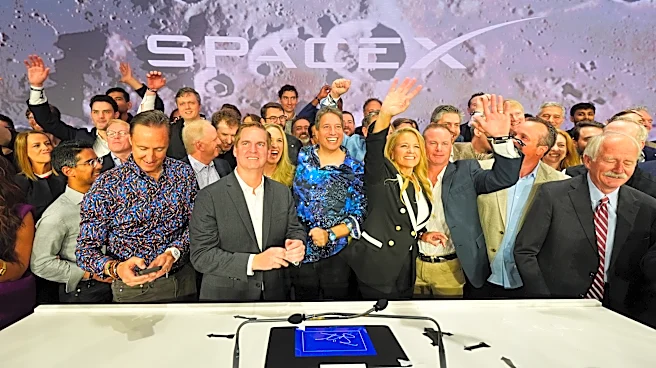
Elon Musk has become the world's first trillionaire, a milestone reached following the market debut of his rocket company, SpaceX. This unprecedented level of personal wealth, once thought unimaginable, is now a reality. Musk's net worth hit $1.1 trillion,
primarily in stock, as reported by Forbes. This development underscores the growing wealth gap, as Musk's fortune vastly exceeds that of other billionaires. For context, the combined net worth of the next four richest individuals, including Google co-founders Larry Page and Sergey Brin, Amazon's Jeff Bezos, and Oracle's Larry Ellison, totals approximately $1.05 trillion. Musk's wealth is so vast that it could purchase 2.5 million homes in the U.S. or 243 billion gallons of gasoline at current prices.
Why It's Important?
Musk's achievement as the first trillionaire highlights the stark wealth disparity in the world. While a select few accumulate vast fortunes, many people struggle with everyday expenses. This wealth concentration raises concerns about economic inequality and its implications for social stability. The fact that Musk's wealth surpasses the GDP of many countries underscores the power and influence concentrated in the hands of a few individuals. This development may prompt discussions on wealth distribution, taxation, and the role of billionaires in society. The growing wealth gap could lead to increased calls for policy changes aimed at addressing economic inequality.
What's Next?
The emergence of the first trillionaire may lead to intensified scrutiny of wealth accumulation and its societal impacts. Policymakers and economists might explore measures to address the wealth gap, such as tax reforms or regulations on wealth accumulation. Additionally, this milestone could influence public discourse on the responsibilities of the ultra-wealthy in contributing to societal well-being. As Musk continues to expand his business ventures, his actions and decisions will likely be closely watched for their broader economic and social implications.
Beyond the Headlines
The rise of the first trillionaire raises ethical questions about wealth concentration and its impact on democracy and social equity. The disparity between the ultra-wealthy and the general population may fuel debates on the moral responsibilities of billionaires. Furthermore, this development could influence cultural perceptions of success and wealth, potentially reshaping societal values and aspirations. The long-term effects of such wealth concentration on innovation, philanthropy, and global economic dynamics remain to be seen.