


What's Happening?
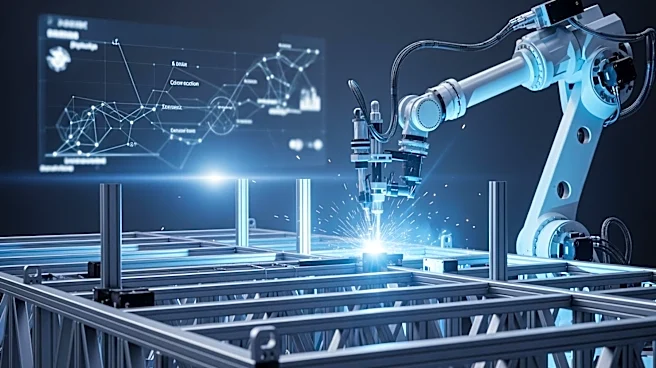
PickNik has launched the ninth version of its robotics development software, MoveIt Pro, which introduces new capabilities designed to improve robotic operations in complex, real-world environments. The update emphasizes 'scan-and-plan' workflows, enabling
robots to perceive their surroundings in real-time and dynamically generate motion paths, moving away from fixed, pre-programmed instructions. This advancement is particularly significant for applications in environments like restroom cleaning, food plant sanitation, and vehicle washing, where robots must adapt to changing layouts and irregular surfaces. The software includes features such as AI-based perception filtering, point cloud alignment, and collision-aware motion planning. Companies like Autowash, Hivebotics, and CleanBotix are already utilizing MoveIt Pro 9 in various sectors, demonstrating its application in automating tasks that require adaptability and precision.
Why It's Important?
The release of MoveIt Pro 9 marks a significant step forward in the field of robotics, particularly in enhancing the adaptability and efficiency of robots in variable environments. This development is crucial for industries that require automation in non-standardized settings, such as sanitation and vehicle care, where traditional robots struggle. By improving the perception-to-motion capabilities, PickNik's software allows for more reliable and safe robotic operations, potentially reducing the need for human intervention in hazardous or labor-intensive tasks. This could lead to increased productivity and safety in industries that adopt these advanced robotic solutions, while also driving innovation in the robotics sector.
What's Next?
As MoveIt Pro 9 becomes available, it is expected that more industries will explore its capabilities to automate complex tasks. The software's ability to adapt to various environments could lead to broader adoption in sectors beyond those currently using it, such as healthcare or construction. Additionally, as companies integrate this technology, there may be further developments in AI-driven robotics, pushing the boundaries of what robots can achieve in dynamic settings. Stakeholders in the robotics industry will likely monitor the software's performance closely to assess its impact and potential for further innovation.