





What's Happening?
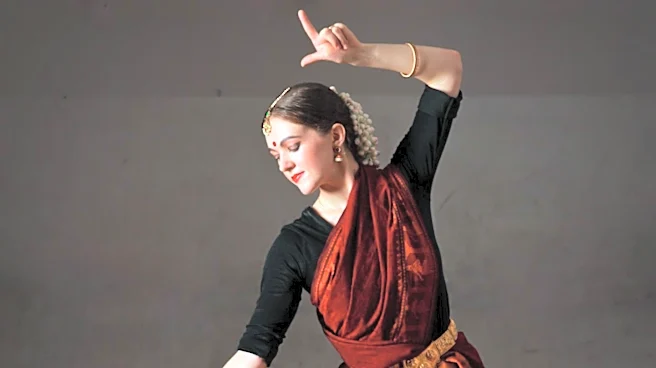
A recent study has explored the application of pose-based embodied interaction to preserve and disseminate the Dunhuang dance heritage digitally. The research combines computer vision experiments with interactive system development to create a lightweight
pose recognition system. This system is designed to facilitate cultural engagement by recognizing Dunhuang dance poses in real-time using accessible hardware. The study involved data preparation, model training, system implementation, and user interaction to validate the feasibility of this approach. The researchers used MediaPipe to extract skeletal keypoints from video recordings of professional dancers, which were then used to train machine learning models. The optimal model was embedded into a real-time interactive system, allowing users to engage with the cultural content through pose recognition and visual feedback.
Why It's Important?
This development is significant as it leverages technology to preserve and promote cultural heritage, making it accessible to a broader audience. By using pose recognition technology, the study provides a novel way to engage with traditional dance forms, which are often at risk of being forgotten. The system's ability to operate on consumer-grade hardware makes it feasible for educational and museum settings, potentially enhancing cultural education and appreciation. Furthermore, the integration of machine learning in cultural heritage projects highlights the potential for technology to support the arts and humanities, offering new ways to experience and interact with cultural content.
What's Next?
The study suggests that future work could focus on improving the system's robustness in various environments, such as outdoor settings or under different lighting conditions. Additionally, there is potential for expanding the system to include other forms of cultural heritage or dance styles, further broadening its application. The researchers also highlight the importance of collaboration with cultural experts to refine recognition criteria and ensure cultural authenticity. As the system is optimized for educational settings, there may be opportunities to integrate it into school curriculums or museum exhibits, providing interactive learning experiences.