
What's Happening?
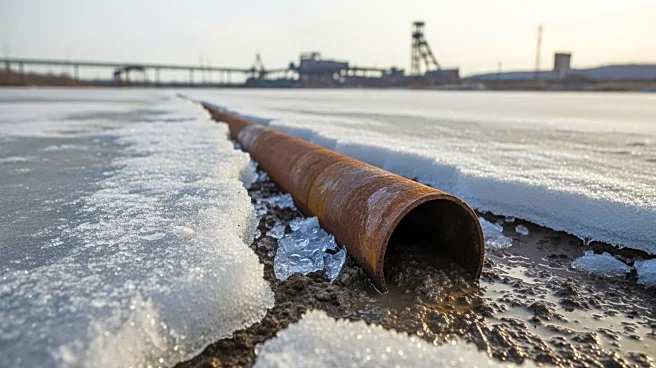
The mining industry is facing significant challenges due to the thawing of permafrost, which historically provided a stable foundation for heavy equipment and processing plants. Rising temperatures are causing the ice-rich ground to melt, leading to structural
instability and maintenance issues. This has resulted in surface subsidence, where the ground contracts and creates voids beneath mining assets, threatening roads, processing buildings, and other critical infrastructure. Engineers are now tasked with designing adaptable foundations and employing cooling technologies to mitigate these risks.
Why It's Important?
The instability caused by thawing permafrost poses severe financial and environmental risks to the mining industry. As ground conditions become unpredictable, companies face increased costs for repairs and potential environmental liabilities, such as leaks from mine waste storage facilities. This situation highlights the broader impact of climate change on industrial operations and the need for innovative engineering solutions. The mining sector's response to these challenges could set precedents for other industries operating in permafrost regions, influencing future infrastructure development and environmental policies.
What's Next?
Mining companies are likely to invest in advanced engineering solutions to stabilize their operations in permafrost regions. This includes the use of thermosyphons to draw heat out of the ground and the implementation of sensors to monitor ground movement. As the industry adapts to these changes, there may be increased collaboration with environmental scientists to develop sustainable practices. Policymakers may also need to consider regulations that address the environmental impact of mining in thawing permafrost areas.