







What's Happening?
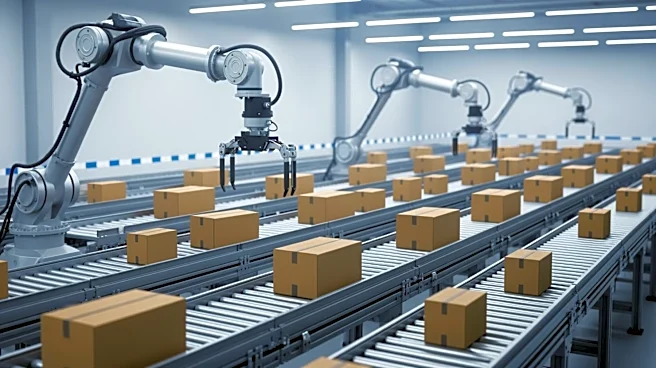
The article discusses the importance of having a solid foundation in warehouse management systems (WMS) before investing in robotics and automation. It highlights that many older or entry-level WMS platforms are not designed to synchronize with real-time
robotics orchestration, leading to operational delays and inefficiencies. The article references a DHL Supply Chain study indicating that while 44% of companies have deployed warehouse robotics, only 34% of executives are satisfied with the results, pointing to foundational issues rather than technological ones. The piece emphasizes that automation can exacerbate existing operational misalignments if the foundational systems are not robust enough.
Why It's Important?
This development is significant for the logistics and supply chain industry in the U.S., as it underscores the need for companies to ensure their foundational systems are capable of supporting advanced technologies like robotics. The potential for increased efficiency and reduced labor costs through automation is substantial, but only if the underlying systems are prepared to handle the integration. Companies that fail to address these foundational issues may face increased operational costs and inefficiencies, potentially impacting their competitiveness in the market.
What's Next?
Organizations are encouraged to conduct a thorough assessment of their current WMS and operational processes to ensure they are ready for automation. This includes evaluating core processes, inventory accuracy, and system integrations. Companies like Made4net offer resources such as a Warehouse Complexity Assessment and a WMS Selection Toolkit to help businesses prepare for automation. The next steps involve aligning foundational systems with the operational complexity of modern warehouse environments to fully leverage the benefits of robotics.