

What's Happening?
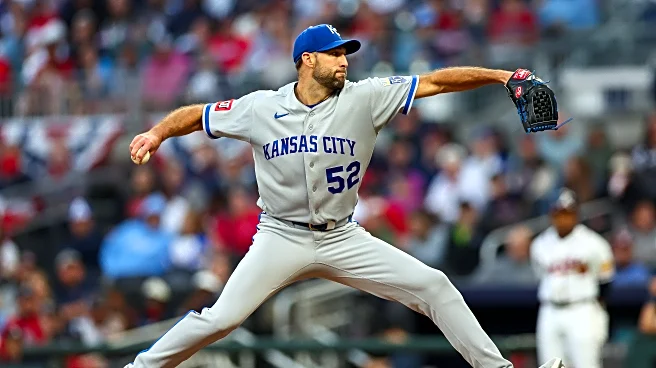
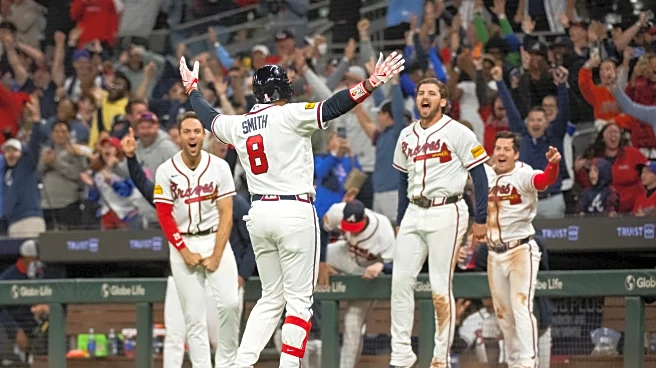
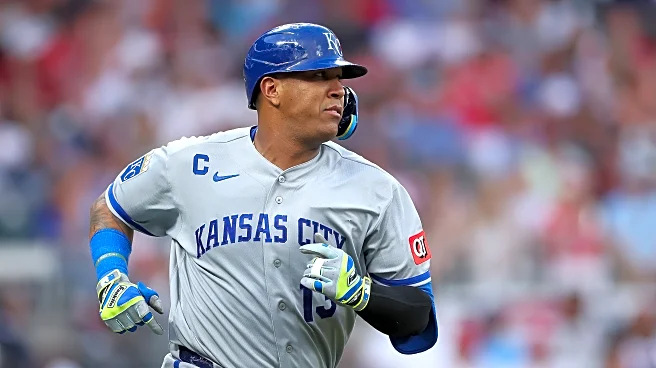
Dominic Smith, the designated hitter for the Atlanta Braves, made history by hitting a walk-off grand slam in his debut with the team, just days after the passing of his mother. This remarkable feat occurred during a game against the Kansas City Royals,
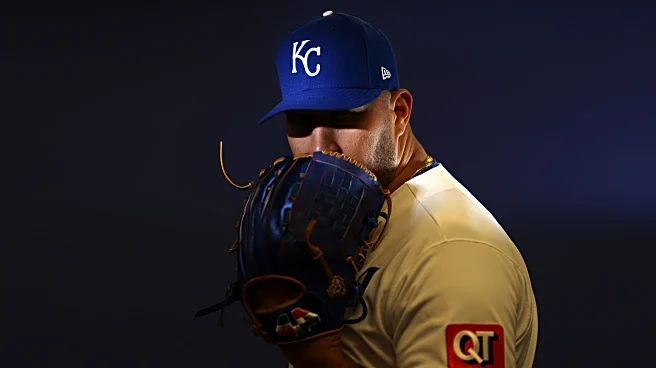
where the Braves overcame a 2-0 deficit in the ninth inning to win 6-2. Smith's performance was particularly poignant as he had recently lost his mother to cancer, a fact that weighed heavily on him during the game. The Braves organization had been supportive of Smith during this difficult time, allowing him to take time off during spring training to be with his family. Smith expressed his gratitude towards his teammates and the organization for their support, noting that their concern was more about his well-being than baseball. His grand slam came off Royals closer Carlos Estevez, who led MLB in saves the previous season.
Why It's Important?
Smith's achievement is significant not only for its historical context—being the first player to hit a walk-off grand slam in his debut with a new team—but also for its emotional impact. It highlights the human side of professional sports, where athletes often face personal challenges while performing at the highest levels. The Braves' support for Smith underscores the importance of mental health and personal well-being in sports, setting a precedent for how teams can support players through personal hardships. This event also serves as an inspiration, showing resilience and the ability to perform under emotional stress, which can resonate with fans and players alike.
What's Next?
Smith is looking forward to the Braves' upcoming road trip to Anaheim, California, where he plans to reunite with family and pay his final respects to his mother. This trip will provide him with the opportunity to find closure and continue his healing process. The Braves, having shown strong support for Smith, will likely continue to rally around him as the season progresses. This incident may also prompt other teams to evaluate their support systems for players dealing with personal issues, potentially leading to broader changes in how mental health is addressed in professional sports.