






What's Happening?
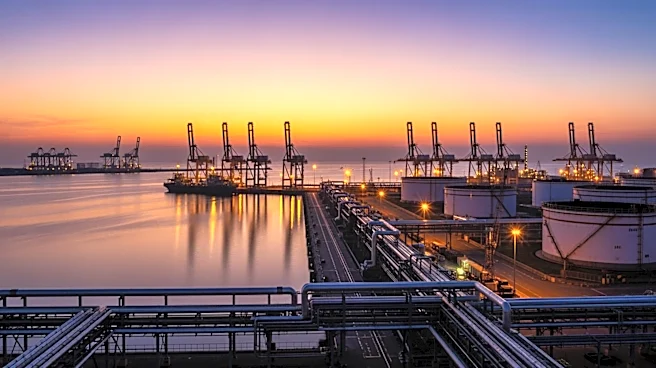
Sentinel Midstream has announced the commencement of construction on a deepwater oil export project off the Texas coast, known as the Texas GulfLink system. This marks the first large-scale export project in the U.S. in years, with commercial operations
expected to begin by the fourth quarter of 2028. The project comes as the U.S. has become a net exporter of crude oil, driven by increased demand from Europe and Asia due to geopolitical tensions in the Middle East. The Texas GulfLink project, supported by a $2.1 billion investment under the U.S.-Japan Trade Agreement, aims to enhance U.S. oil export capabilities by allowing supertankers to be fully loaded, reducing shipping costs.
Why It's Important?
The development of the Texas GulfLink project is significant for the U.S. energy sector, as it enhances the country's ability to export crude oil efficiently. This project supports the U.S. position as a major player in the global oil market, particularly as Asian countries seek alternatives to Middle Eastern oil. The investment from Japan underscores international confidence in U.S. energy infrastructure and highlights the strategic importance of U.S. oil exports in global energy security. The project also aligns with President Trump's energy policies aimed at expanding U.S. production and infrastructure.
What's Next?
As construction begins, Sentinel Midstream will focus on acquiring long-lead equipment and starting excavation activities. The project's progress will be closely monitored by industry stakeholders, as it represents a significant expansion of U.S. oil export capacity. The successful completion of the Texas GulfLink system could lead to further investments in U.S. energy infrastructure and strengthen trade relations with international partners. Additionally, the project's impact on global oil flows and shipping costs will be of interest to both producers and consumers in the energy market.