



What's Happening?
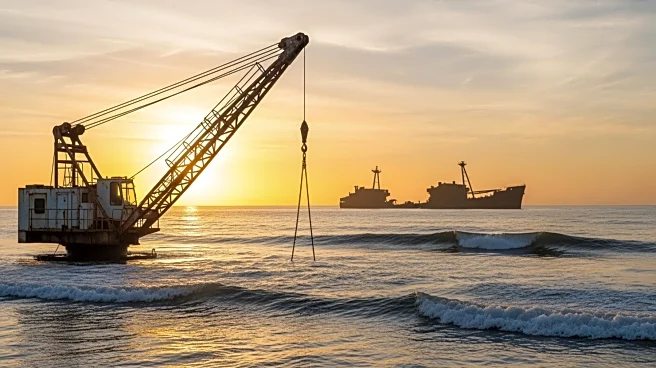
The marine salvage industry, a critical yet often overlooked sector of the maritime industry, is navigating a complex landscape characterized by unique operational and financial challenges. Companies like Smit International, Resolve Marine, and Donjon Marine are at the forefront, leveraging their expertise in spill response, marine firefighting, and wreck removal to fill service voids within the maritime industry. These firms are adapting to the 'feast or famine' nature of the industry by diversifying their services to include ship repair, marine towing, and dredging. The industry is also responding to new challenges such as lithium-ion battery fires and the need for emergency management in the face of alternative fuel-powered vessels. The Resolve Training
Academy is addressing the industry's skilled labor shortage by offering USCG-approved courses, enhancing the skill sets of salvors and other maritime professionals.
Why It's Important?
The marine salvage industry plays a vital role in maintaining maritime safety and environmental protection. As global shipping continues to grow, the demand for skilled salvors capable of handling complex emergencies is increasing. The industry's ability to adapt to new challenges, such as alternative fuel risks and hazardous material incidents, is crucial for ensuring the safety of maritime operations. Companies that can effectively diversify their services and train skilled labor are better positioned to thrive in this volatile market. The industry's evolution also has significant implications for maritime insurers, regulators, and shipowners, who rely on salvors for effective emergency response and risk management.
What's Next?
As the maritime industry continues to evolve, the demand for advanced salvage operations and emergency management solutions is expected to grow. Companies like Resolve Marine are likely to expand their training programs and service offerings to meet these needs. The acquisition of Donjon Marine by Tallvine Partners suggests potential for further expansion and innovation within the industry. Stakeholders, including insurers and regulators, will likely push for more robust emergency response capabilities and transparency in salvage operations. The industry's ability to adapt to new technologies and environmental regulations will be critical in shaping its future trajectory.
Beyond the Headlines
The marine salvage industry's challenges highlight broader issues within the maritime sector, such as the need for sustainable practices and the integration of new technologies. The industry's response to these challenges could set precedents for other sectors facing similar issues. Additionally, the focus on training and skill development underscores the importance of investing in human capital to address labor shortages and enhance operational efficiency. The industry's evolution may also influence policy discussions around maritime safety and environmental protection, potentially leading to stricter regulations and standards.