






What's Happening?
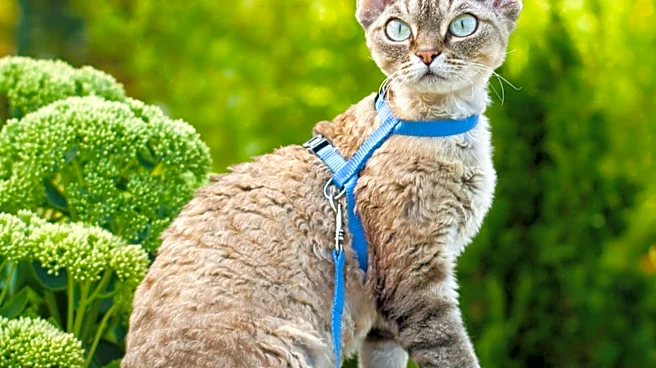
A growing trend among pet owners is the practice of walking cats on leashes, similar to dogs, to provide them with outdoor experiences. This approach is highlighted by the story of Tux, a cat who transitioned from being a neighborhood stray to enjoying
outdoor walks on a leash. The process involves using a snug harness and a long leash, allowing the cat to explore while ensuring safety. Experts recommend gradual acclimation to leash walking, emphasizing the importance of a secure environment free from loud noises and potential threats. The practice aims to enrich the lives of indoor cats by offering them a taste of the outdoors, which can improve their mood and behavior.
Why It's Important?
The trend of leash walking cats reflects a broader shift in pet care, where owners seek to enhance the quality of life for their pets by providing them with diverse experiences. This practice can significantly impact the well-being of indoor cats, who may otherwise suffer from boredom and lack of stimulation. By allowing cats to explore the outdoors safely, owners can help reduce behavioral issues and improve their pets' overall happiness. This approach also highlights the evolving understanding of pet needs, encouraging owners to consider the unique preferences and behaviors of their animals.
What's Next?
As more pet owners adopt leash walking for their cats, there may be increased demand for specialized pet products, such as harnesses and leashes designed specifically for cats. Additionally, public spaces like parks may see more cats on leashes, prompting discussions about pet-friendly policies and safety measures. Pet care professionals and behaviorists might also develop new training programs to support owners in transitioning their cats to outdoor experiences safely. This trend could lead to a broader acceptance of diverse pet activities, challenging traditional notions of pet care.
Beyond the Headlines
The practice of leash walking cats raises questions about the ethical considerations of pet ownership and the responsibilities of providing a fulfilling life for animals. It challenges the stereotype of cats as solely indoor pets and encourages a reevaluation of their needs. This trend may also influence cultural perceptions of pet care, promoting a more inclusive understanding of what constitutes a happy and healthy pet lifestyle. As society continues to value pet well-being, innovations in pet care and training are likely to emerge, reflecting a deeper commitment to animal welfare.