
What's Happening?
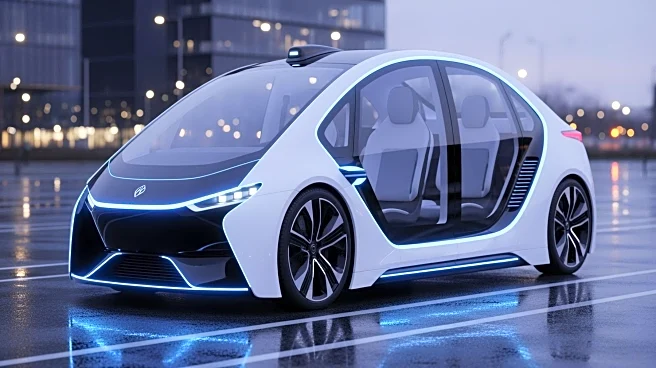
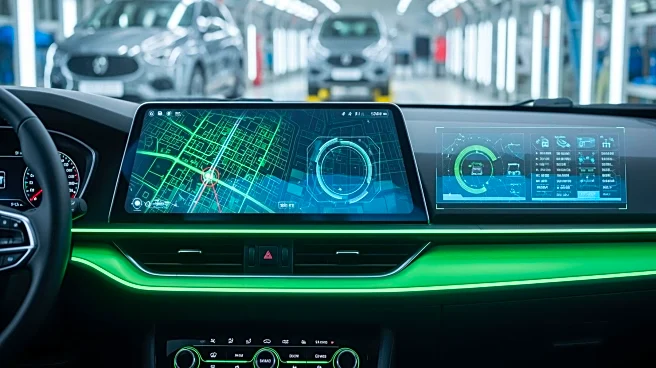
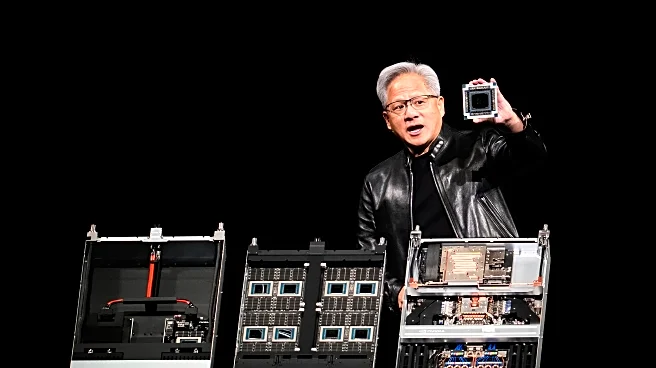
Nvidia has announced that it is expanding its robotaxi program by partnering with leading Chinese automakers BYD and Geely. This collaboration will see these companies utilize Nvidia's Drive Hyperion platform, which includes the necessary chips, computers,
sensors, and software for developing Level 4 autonomous vehicles. BYD, which already uses Nvidia's chips in its manually driven cars, will now employ the Hyperion platform for its next-generation vehicles. Geely, on the other hand, is integrating Nvidia's Thor chips into its new Zeekr vehicles, which are also supplied to Waymo for its U.S.-based robotaxi service. This development comes amid ongoing trade tensions between the U.S. and China, particularly concerning the sale of Nvidia's chips used in AI model training.
Why It's Important?
The partnership between Nvidia and these Chinese automakers is significant as it could accelerate the development of autonomous vehicles in China, potentially allowing the country to surpass the U.S. in this field. The U.S. and China are currently neck-and-neck in the robotaxi sector, with companies like Baidu operating commercial robotaxis in multiple Chinese cities. Nvidia's involvement could enhance China's competitive edge, prompting U.S. lawmakers to push for autonomous vehicle legislation to maintain technological leadership. Additionally, this move highlights Nvidia's strategic efforts to position itself as a leader in the self-driving technology market, despite its automotive division being a small fraction of its overall revenue.
What's Next?
Nvidia's collaboration with BYD and Geely is likely to spur further advancements in autonomous vehicle technology. The company is also working with other automakers like Nissan and Isuzu to develop Level 4 vehicles, indicating a broader push into the global autonomous vehicle market. As more robotaxis are deployed, safety concerns will remain a critical issue, with Nvidia introducing new safety systems like Halos OS to address potential risks. The ongoing development and deployment of autonomous vehicles will likely influence regulatory frameworks and market dynamics in both the U.S. and China.