







What's Happening?
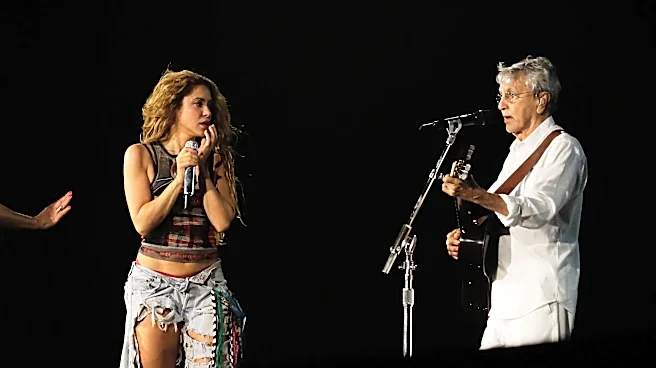
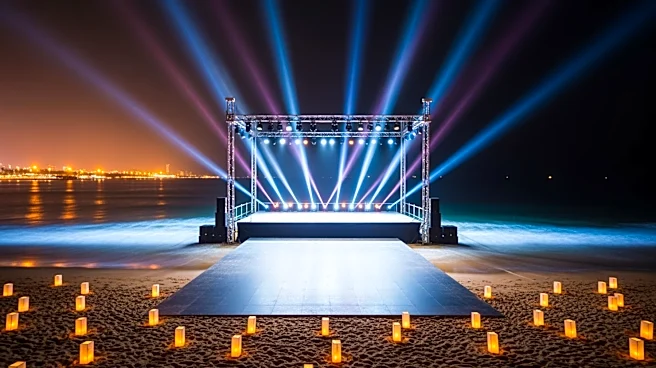
Colombian pop star Shakira performed a free concert on Rio de Janeiro's Copacabana Beach, attracting an audience of two million people. The event was part of her 'Las Mujeres Ya No Lloran' world tour, named after her 2024 album. The concert, which took
place on a Saturday night, featured popular songs such as 'Hips Don't Lie' and 'La Bicicleta'. Shakira expressed her fondness for Brazil, reminiscing about her first visit to the country at the age of 18. The performance was marked by skywriting drones displaying messages of love for Brazil in Portuguese. The event was organized by the city to stimulate economic activity following major festivities like Carnival and New Year's Eve.
Why It's Important?
The concert is significant as it serves as a major economic booster for Rio de Janeiro, with an estimated generation of 777 million reais (approximately $215 million) in economic activity. This influx is attributed to increased spending in local restaurants, hotels, and shops by the large number of tourists attending the event. Such large-scale events are part of the city's strategy to maintain economic momentum between major festivals. The concert also highlights the cultural impact of international artists like Shakira, who draw global attention to local venues, thereby enhancing the city's reputation as a vibrant cultural hub.
What's Next?
Following the success of Shakira's concert, Rio de Janeiro may continue to host similar large-scale events to sustain economic growth and tourism. The city's administration might explore partnerships with other international artists to replicate this model. Additionally, the positive reception of the concert could encourage other cities to adopt similar strategies to boost their local economies. The event's success may also influence future planning for public safety and infrastructure to accommodate large crowds.
Beyond the Headlines
The concert underscores the power of music as a unifying force, bringing together diverse audiences in celebration. It also highlights the role of public events in promoting cultural exchange and understanding. Furthermore, the event reflects the growing trend of using entertainment as a tool for economic development, showcasing how cultural initiatives can have tangible economic benefits. The concert's success may inspire other cities to leverage cultural events for economic and social gains.