







What's Happening?
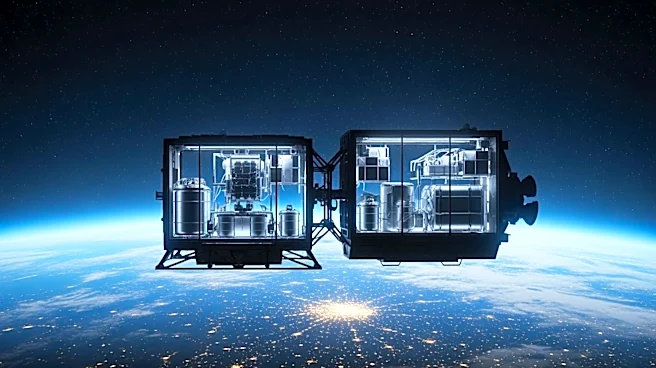
The ISS National Laboratory has introduced the 2026 Orbital Edge Accelerator, a program aimed at supporting deep-tech startups by providing them with access to the International Space Station (ISS) for research and development. The accelerator will select
six startups, each eligible for up to $750,000 in venture funding. The program offers a unique opportunity for startups to conduct in-orbit research projects sponsored by the ISS National Lab. This initiative is designed to expedite the development timelines for startups, which would otherwise take years using traditional laboratory and field testing methods. The application deadline for the 2026 cohort is May 26. The accelerator focuses on sectors where microgravity research can offer significant advantages, including robotics, advanced manufacturing, artificial intelligence, materials science, biotechnology, and space infrastructure.
Why It's Important?
The Orbital Edge Accelerator represents a significant opportunity for startups in the deep-tech sector to leverage the unique environment of low Earth orbit for research and development. By providing access to the ISS, the program allows startups to conduct experiments and tests that are not feasible on Earth, potentially leading to breakthroughs in various fields. This initiative not only accelerates product development but also serves as a validation platform for venture investors, indicating that participating companies have undergone rigorous scientific and operational reviews. The program's success could lead to increased investment in space-based research and development, fostering innovation and growth in the space industry.
What's Next?
The ISS National Lab has not yet announced the six startups selected for the 2026 accelerator cohort. Once selected, these startups will begin their journey of conducting in-orbit research and development. The program is expected to continue attracting interest from venture investors, given its track record of helping startups secure significant funding. As the accelerator progresses, it may influence how startups approach advanced R&D, potentially leading to more companies utilizing orbital testing environments to compress development timelines. The success of this program could also encourage other organizations to explore similar initiatives, further integrating space-based research into the broader tech industry.