

What's Happening?
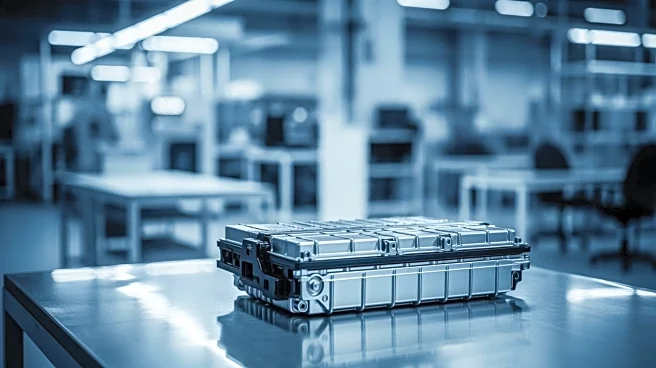
SK Battery America has announced a significant reduction in its workforce at the Commerce, Georgia plant, laying off 958 employees, which constitutes a 37% cut. This decision comes in the wake of declining demand for electric vehicles (EVs) in the United
States. The plant, which began operations in January 2022 with a $2.6 billion investment, was primarily supplying battery cells for the Ford F-150 Lightning. However, the model was discontinued in December 2025, leading to a reassessment of production needs. The layoffs follow the dissolution of SK's $11.4 billion joint venture with Ford, resulting in a substantial asset impairment. SK Battery America is now shifting its focus towards the battery energy storage system (ESS) market as a strategic pivot.
Why It's Important?
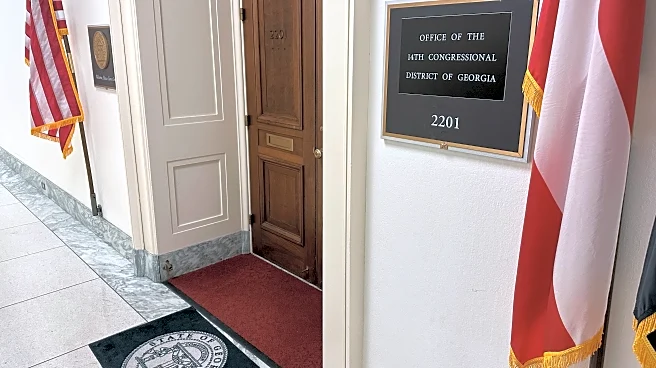
The workforce reduction at SK Battery America's Georgia plant highlights the broader challenges facing the EV industry in the U.S., particularly under the current federal policies. The removal of the $7,500 consumer EV tax credit and the weakening of fuel economy and emissions standards have diminished incentives for automakers to pursue electrification aggressively. This policy shift has led to stagnation in EV sales, which remained at about 8% of new vehicle sales in 2025. The layoffs are particularly significant for Georgia, a state that has been a major beneficiary of green energy investments under the Inflation Reduction Act. The political implications are notable, as the layoffs could influence voter sentiment in a state that has been politically competitive in recent years.
What's Next?
Looking ahead, SK Battery America is not entirely retreating from its operations in Georgia. A second plant, developed in partnership with Hyundai, is expected to commence production in the first half of 2026. Additionally, the Tennessee facility retains the potential to supply both automotive and ESS cells. The company's pivot towards the ESS market is a strategic move to mitigate the impact of declining EV demand. However, it remains uncertain whether the ESS market can fully absorb the capacity and ambitions of major players like SK, LG Energy Solution, and Samsung SDI. The outcome of these strategic shifts will be closely watched by industry stakeholders and policymakers.