








What's Happening?
Adaptyx Biosciences, a company spun out from Stanford University, has presented groundbreaking data at the American Diabetes Association's 86th Scientific Sessions. The company showcased the first continuous, multi-day measurement of free cortisol in humans
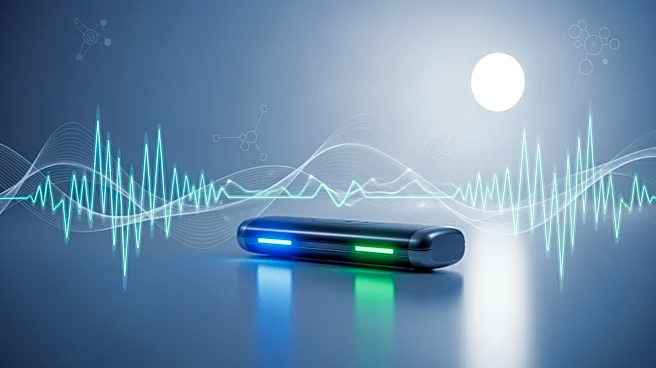
using a wearable sensor. This sensor measures cortisol from dermal interstitial fluid, providing a time-resolved view of the hormone's rhythm, which is crucial for understanding glucose control, cardiovascular health, stress response, and sleep. The data was collected from two first-in-human studies: a controlled oral hydrocortisone challenge and overnight monitoring. The wearable sensor demonstrated concordance with traditional blood measurements and captured the body's natural cortisol rhythm, offering insights that conventional tests cannot provide.
Why It's Important?
The development of a continuous cortisol monitoring device represents a significant advancement in medical diagnostics. Cortisol is a critical hormone that affects numerous bodily functions, including metabolism, immunity, and cardiovascular health. Traditional methods of measuring cortisol provide only a snapshot, missing the dynamic nature of its rhythm. Adaptyx's technology allows for continuous monitoring, which can lead to better management of conditions like diabetes, hypertension, and depression. This innovation could transform clinical care by providing real-time data that helps in understanding and treating diseases influenced by cortisol dysregulation. It also opens up possibilities for consumer applications in stress and sleep management.
What's Next?
Adaptyx is pursuing FDA approval for its continuous cortisol monitor through a Class II regulatory pathway. The company plans to initially target clinical applications in adrenal and cardiometabolic diseases. Beyond these, the technology could be applied in psychiatry, critical care, and pharmaceutical development, offering a new tool for understanding and managing conditions related to cortisol dysregulation. Adaptyx is also exploring consumer applications, potentially expanding the use of continuous cortisol monitoring to broader health and wellness markets.
Beyond the Headlines
The introduction of continuous cortisol monitoring could have far-reaching implications beyond immediate clinical applications. It represents a shift towards more personalized and precise healthcare, where real-time data can inform treatment decisions and lifestyle adjustments. This technology could also drive new research into the role of cortisol in various diseases, leading to novel therapeutic approaches. Furthermore, as the platform expands to include other biomarkers, it could revolutionize how we monitor and understand human health at a molecular level.