
What's Happening?
Nvidia has emerged as a key player in the AI infrastructure market, driven by significant investments from major hyperscalers like Amazon, Microsoft, Alphabet, and Meta. These companies are collectively
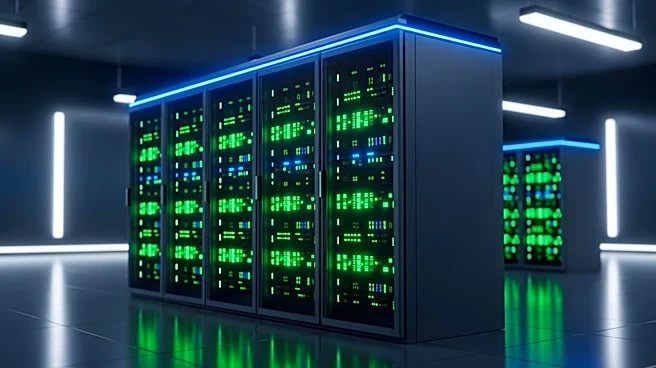
planning to spend approximately $710 billion on AI infrastructure this year. Nvidia's data-center revenue has surged by 75% year over year, reaching $193.7 billion, largely due to the demand for its Hopper and Blackwell AI systems. Despite competition from companies like Advanced Micro Devices and internal developments by tech giants, Nvidia's CUDA platform remains deeply embedded in enterprise AI workloads, making it difficult for customers to switch ecosystems. The hyperscalers' investments are not just for current AI applications but also for future autonomous AI agents and AI-powered products, positioning Nvidia at the center of this technological shift.
Why It's Important?
The massive investment in AI infrastructure by the largest hyperscalers underscores the growing importance of AI in various industries, including healthcare, finance, and manufacturing. Nvidia's central role in this buildout highlights its strategic position in the AI market, benefiting from the need for advanced computing resources. This development could lead to significant advancements in AI capabilities and applications, potentially transforming industries and creating new economic opportunities. However, Nvidia also faces risks, such as potential slowdowns in hyperscaler spending and competition from custom silicon efforts by major tech companies.
What's Next?
As hyperscalers continue to invest in AI infrastructure, Nvidia is likely to maintain its dominant position in the market. The company's ongoing developments, such as the Nemotron 3 Nano Omni, aim to control the entire enterprise AI pipeline, further solidifying its role in AI deployment. The continued expansion of AI applications across industries will likely drive further demand for Nvidia's products, although the company must navigate challenges such as competition and regulatory hurdles in exporting advanced AI chips.