



What's Happening?
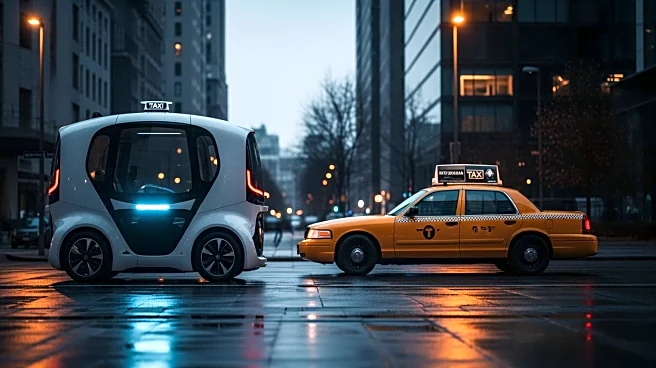
Waymo, a leading company in the autonomous vehicle industry, is set to receive a $16 billion investment to expand its driverless taxi services globally. This expansion includes smaller American cities like Sacramento and Nashville, as well as international capitals such as London and Tokyo. The move comes as Waymo aims to solidify its presence in the transportation sector, offering an alternative to traditional taxis and rideshare services. The company’s autonomous vehicles, which are equipped with advanced sensors and AI technology, are being positioned as a more efficient and potentially safer option compared to human-driven taxis. However, this technological advancement has sparked debates about the impact on jobs within the traditional taxi industry, which is heavily
regulated and unionized.
Why It's Important?
The expansion of Waymo's autonomous taxis represents a significant shift in the transportation industry, potentially affecting thousands of jobs in the traditional taxi sector. As driverless technology becomes more prevalent, there is a growing concern about the displacement of human drivers and the broader implications for employment. While autonomous vehicles promise increased efficiency and safety, they also challenge existing regulatory frameworks and labor protections. The rise of driverless taxis could lead to a reduction in job opportunities for taxi drivers, who rely on this profession as a primary source of income. Additionally, the shift towards automation raises questions about data privacy and the ethical use of AI in public transportation.
What's Next?
As Waymo continues to expand its services, regulatory bodies and labor unions may need to address the challenges posed by autonomous vehicles. Policymakers could consider implementing new regulations to ensure fair competition between traditional taxis and driverless services. Labor unions might advocate for protections and retraining programs for displaced workers. The public's acceptance of autonomous taxis will also play a crucial role in determining the future of this technology. Ongoing discussions about safety, privacy, and the ethical implications of AI in transportation are likely to shape the industry's trajectory in the coming years.
Beyond the Headlines
The rise of autonomous taxis like Waymo's highlights a broader trend towards automation across various industries. This shift raises important questions about the future of work and the role of technology in society. As automation becomes more integrated into daily life, there is a need to balance technological advancement with social responsibility. Ensuring that the benefits of automation are equitably distributed and that vulnerable workers are supported during transitions will be critical. The conversation around autonomous vehicles also touches on issues of urban planning, environmental impact, and the evolution of public transportation systems.