




What's Happening?
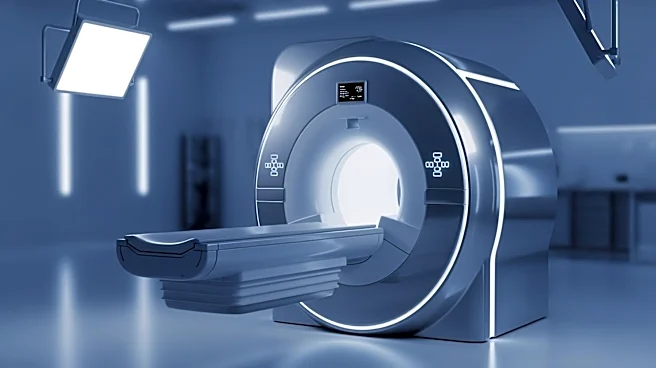
Esaote, a prominent player in medical imaging, has introduced its innovative I-Genius MRI system at the American Association of Neurological Surgeons (AANS) Annual Meeting in San Antonio, Texas. The I-Genius is an open MRI system specifically designed
for intraoperative imaging during brain tumor surgeries, particularly glioma. This system allows for multiple MRI scans during surgery without the need to reposition the patient, thereby reducing complexity and enhancing real-time decision-making for surgeons. The development of I-Genius involved collaboration between Esaote's R&D teams and leading neurosurgeons, aiming to improve surgical outcomes by providing precise imaging and an optimized workflow. Although the system is not yet available for sale in the U.S., it is generating significant international interest and is on a clear path toward entering the U.S. market.
Why It's Important?
The introduction of the I-Genius MRI system represents a significant advancement in neurosurgical procedures, particularly for glioma surgeries where complete tumor removal is challenging. By providing real-time imaging, the system enhances the accuracy and safety of tumor resections, potentially improving patient outcomes. This innovation could lead to reduced procedure times and costs, as well as a higher standard of care. The system's ability to provide intraoperative MRI without disrupting the surgical workflow marks a shift from estimation to objective measurement in tumor surgeries. As the system moves closer to U.S. market entry, it could have a substantial impact on the healthcare industry, offering a new tool for neurosurgeons and potentially setting a new standard in surgical care.
What's Next?
As Esaote continues to develop the I-Genius system, the next steps involve obtaining FDA approval to enter the U.S. market. The company is likely to focus on expanding its presence and demonstrating the system's benefits to the neurosurgical community. Stakeholders, including hospitals and surgical centers, may begin evaluating the system's potential integration into their operations. The success of I-Genius in the U.S. could prompt further innovations in intraoperative imaging and influence future developments in medical imaging technology.