

What's Happening?
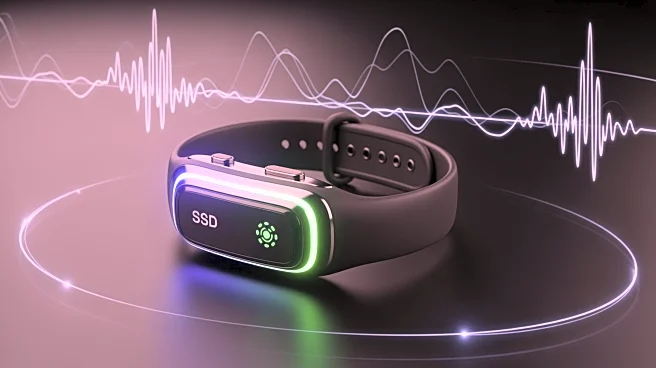
Qualcomm Technologies Inc. has announced the release of the Snapdragon Wear Elite, a new chip designed for wearable devices such as smartwatches and AI pendants. This chip is notable for its integration of a neural processing unit (NPU), which allows
for high-performance AI processing directly on the device. Qualcomm envisions these devices as part of a broader 'AI network,' where they function independently rather than as mere extensions of smartphones. The Snapdragon Wear Elite is designed to support multiple operating systems and aims to create an 'Ecosystem of You,' where AI agents across various devices can understand and respond to user needs. The chip promises significant improvements in performance, including a fivefold increase in single-core CPU performance and a sevenfold increase in GPU rendering and multitasking capabilities. Additionally, it offers enhanced power management, providing 30% longer battery life and faster charging capabilities.
Why It's Important?
The introduction of the Snapdragon Wear Elite chip marks a significant advancement in the wearable technology sector, potentially transforming how these devices interact with users. By enabling more sophisticated AI processing on the device itself, Qualcomm is paving the way for wearables to become more autonomous and integrated into users' daily lives. This development could lead to more personalized and efficient user experiences, as devices learn and adapt to individual behaviors and preferences. The enhanced performance and connectivity features of the chip, including support for 5G and advanced Wi-Fi, position it as a key player in the evolution of smart wearables. This could have broad implications for industries focused on health, fitness, and personal technology, as well as for consumers seeking more intuitive and responsive devices.
What's Next?
The first devices featuring the Snapdragon Wear Elite chip are expected to be released in the coming months. As these products enter the market, they are likely to drive further innovation in the wearable technology space. Companies like Google and Motorola have expressed interest in leveraging the chip's capabilities to enhance their own wearable offerings. This could lead to a new wave of smartwatches and other devices that offer improved performance, battery life, and connectivity. As the technology becomes more widespread, it may also prompt other manufacturers to develop similar solutions, potentially leading to increased competition and further advancements in the field.