



What's Happening?
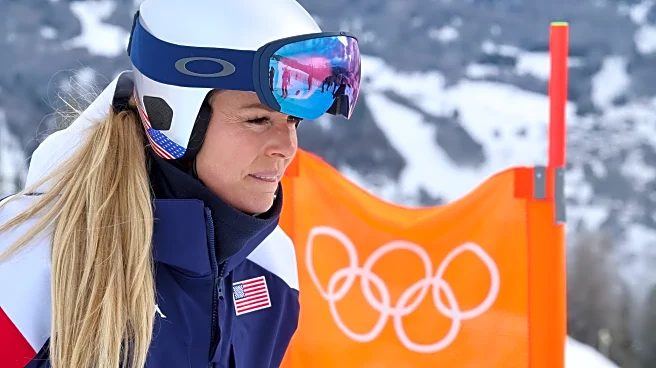
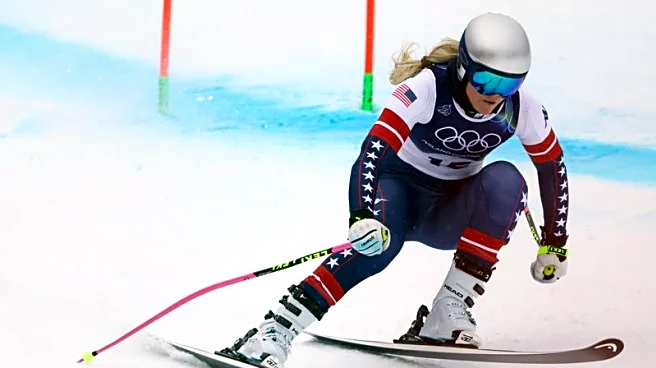
Lindsey Vonn, a prominent figure in the Winter Olympics, has announced her intention to compete in the women's downhill competition despite suffering a ruptured anterior cruciate ligament (ACL) in her left knee. The injury occurred during a downhill race in Crans-Montana, Switzerland, on January 30. Vonn, who is 41 years old, has a history of knee injuries and underwent titanium reconstruction on her right knee last year. Despite medical advice against competing, Vonn is determined to participate in her fifth Olympics, citing her commitment to not let the opportunity slip away. Her decision has sparked discussions about the risks involved, especially given the severity of her injury. Vonn's resolve is supported by her teammates and her childhood
idol, Picabo Street, who will be present during the competition.
Why It's Important?
Vonn's decision to compete despite her injury highlights the intense dedication and resilience often seen in elite athletes. Her participation in the Olympics, even with a significant injury, underscores the pressures and expectations placed on athletes to perform at the highest levels. This situation raises questions about the balance between athletic ambition and personal safety, as well as the role of medical advice in sports. Vonn's case also brings attention to the broader issue of how athletes are sometimes pushed to their limits, potentially risking long-term health for short-term achievements. The outcome of her participation could influence future discussions on athlete welfare and the management of injuries in competitive sports.
What's Next?
Vonn is set to compete in the women's downhill event at the Winter Olympics, with her performance being closely watched by fans and sports analysts. The event will test her physical limits and could have significant implications for her career and health. Depending on the outcome, there may be further discussions on the protocols for allowing injured athletes to compete. Additionally, Vonn's participation could inspire other athletes facing similar challenges, while also prompting sports organizations to reevaluate their support systems for injured competitors.