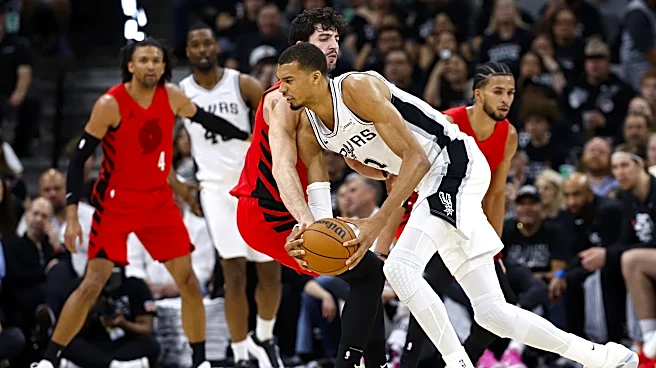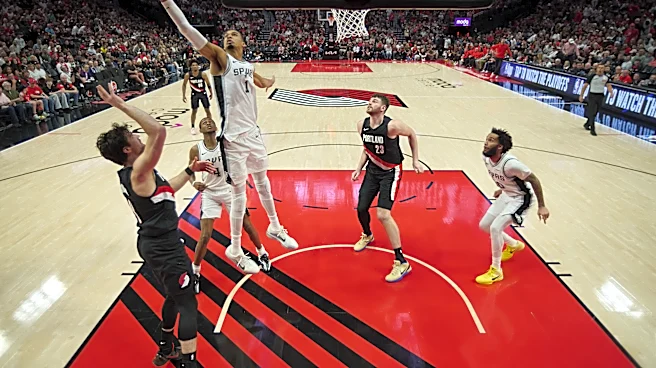





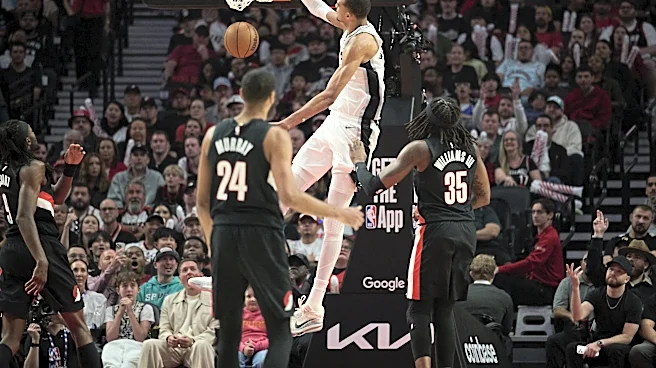

What's Happening?
Victor Wembanyama, a rising NBA star, has publicly defended his emotional displays on the court, following criticism from fans. In a recent interview, Wembanyama addressed the scrutiny he faced after being seen crying during a game, explaining that he refuses
to hide his emotions due to societal expectations. The 22-year-old has become a prominent figure in the NBA, known for his impressive performance during the postseason, where he averaged 21 points, 8.8 rebounds, and 4.0 blocks per game. Wembanyama's emotional reaction came after the San Antonio Spurs secured a series-clinching victory, marking a significant milestone in their playoff journey.
Why It's Important?
Wembanyama's stance on emotional expression challenges traditional notions of masculinity in sports, where athletes are often expected to suppress their emotions. By openly discussing his feelings, Wembanyama is contributing to a broader conversation about mental health and emotional well-being in professional sports. His actions may inspire other athletes to embrace their emotions, promoting a more inclusive and supportive environment. This shift could lead to a reevaluation of how emotional expression is perceived in sports, encouraging a culture that values authenticity and mental health alongside physical performance.
What's Next?
As the Spurs advance in the playoffs, Wembanyama's performance and emotional openness will continue to be in the spotlight. The team's success may further validate his approach, potentially influencing how other athletes and teams address emotional expression. The Spurs are set to face the winner of the Nuggets-Timberwolves series, and Wembanyama's leadership and emotional resilience will be crucial in their pursuit of a championship. The ongoing dialogue around his emotional displays may also prompt broader discussions within the NBA and other sports leagues about the importance of mental health support for athletes.