
What's Happening?
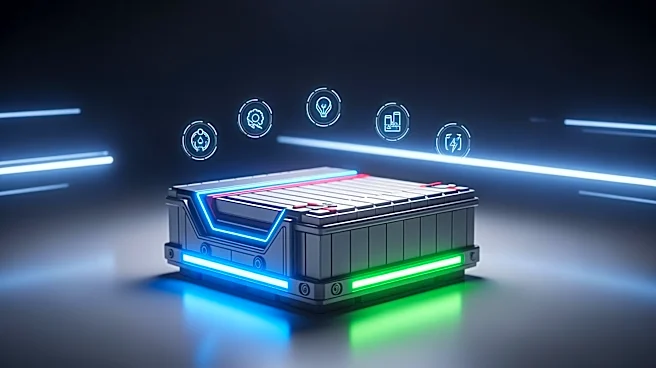
At the recent Beijing Auto Show, Chinese companies CATL and BYD showcased groundbreaking electric vehicle (EV) battery technologies that significantly reduce charging times. CATL introduced its Shenxing
3 EB battery pack, capable of charging from 10% to 98% in just 6.5 minutes. Similarly, BYD presented a battery that charges from 10% to 97% in nine minutes. These advancements highlight China's leadership in EV technology, as current Western standards typically require 30 minutes for a 10-80% charge. The show also featured innovations from other Chinese companies like CALB Group, EVE Energy, and Sunwoda, all demonstrating rapid charging capabilities. Sunwoda also unveiled a battery for eBikes that charges from 10% to 80% in 20 minutes, promising to enhance the practicality of electric transportation.
Why It's Important?
The advancements in EV battery technology showcased at the Beijing Auto Show are significant for the global automotive industry, particularly as the world shifts towards sustainable energy solutions. Rapid charging capabilities could eliminate one of the last barriers to widespread EV adoption, making electric vehicles more convenient and appealing to consumers. This technological leap positions China as a leader in the EV market, potentially influencing global standards and accelerating the transition from fossil fuels. The innovations could also impact U.S. automakers, who may need to accelerate their own research and development efforts to remain competitive in the global market.
What's Next?
As these rapid charging technologies are further developed and potentially commercialized, they could lead to a significant shift in consumer preferences towards electric vehicles. Automakers worldwide, including those in the U.S., may need to adapt quickly to integrate similar technologies into their offerings. Additionally, infrastructure development, such as the installation of compatible charging stations, will be crucial to support these advancements. The competitive landscape in the EV market is likely to intensify, with companies racing to offer the most efficient and user-friendly solutions.
Beyond the Headlines
The rapid advancements in EV battery technology also raise questions about the environmental and ethical implications of battery production and disposal. As demand for EVs increases, so does the need for sustainable practices in mining and recycling battery materials. Furthermore, the geopolitical landscape could be affected, as countries with advanced EV technologies may gain economic and strategic advantages. The shift towards electric transportation also has the potential to reduce global carbon emissions significantly, contributing to climate change mitigation efforts.