
What's Happening?
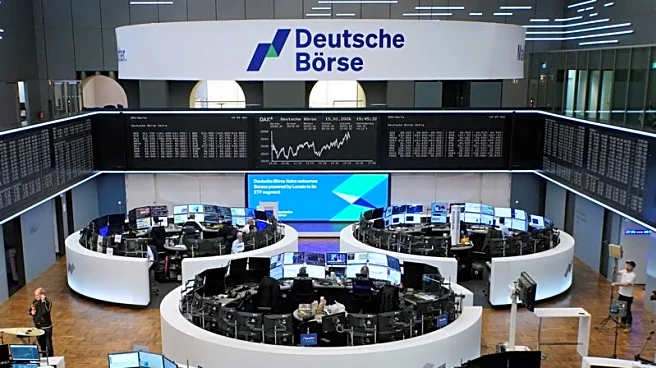
Euronext, the pan-European exchange operator, is experiencing a typical year-end trading environment characterized by reduced liquidity and market closures. The company's stock, listed under the ticker ENX, recently closed at €126.60, marking an 18% increase over the past year. This performance is attributed to Euronext's robust trading activity and scalable market infrastructure revenue streams. As the year concludes, Euronext has emphasized its role as a leading European listing venue, with 76 admissions in 2025, including 50 new equity listings. The company also highlighted its significant presence in debt listings, with over 14,500 new bonds listed this year. Euronext's strategic focus on non-volume-related revenue, which accounts for 60%
of its total income, positions it to weather fluctuations in trading volumes.
Why It's Important?
The developments at Euronext are significant as they reflect broader trends in the financial markets, particularly the impact of macroeconomic factors such as interest rate expectations and trading volumes. Euronext's ability to maintain strong performance despite market closures and reduced liquidity underscores the resilience of its business model. The company's focus on non-volume-related revenue streams provides stability and growth potential, even when trading volumes fluctuate. This approach is crucial for exchange operators, as it mitigates the risks associated with market volatility. Additionally, Euronext's leadership in listings and debt markets positions it as a key player in European capital markets, attracting both large corporations and SMEs seeking public funding.
What's Next?
As Euronext prepares for the final trading sessions of 2025, investors are closely monitoring the impact of interest rate expectations on market activity. The upcoming release of Federal Reserve minutes is expected to provide insights into the rate path debate, influencing cross-asset positioning into 2026. Euronext's performance in the coming weeks will depend on market liquidity and investor sentiment, particularly regarding rate cuts and market rotation. The company's strategic focus on expanding its non-volume revenue base and maintaining a strong listing pipeline will be critical in navigating the challenges and opportunities of the new year.