



What's Happening?
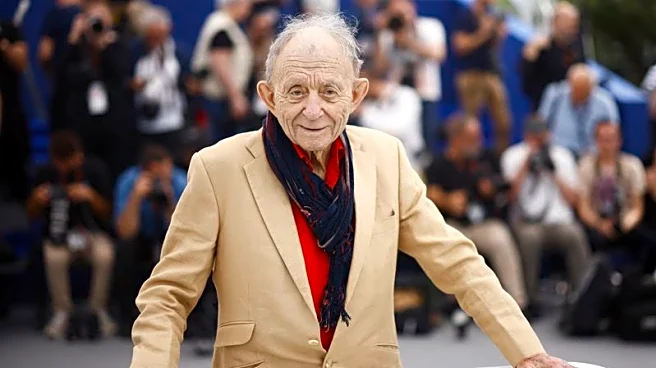
Frederick Wiseman, a renowned documentary filmmaker known for his in-depth exploration of American institutions, has died at the age of 96. Wiseman's career spanned over five decades, during which he produced more than 35 documentaries. His films, such as 'Titicut Follies' and 'High School,' are celebrated for their unadorned and revealing portrayal of various facets of American life. Wiseman's work often focused on institutions like schools, hospitals, and public housing, capturing the human behavior within these settings. His style was characterized by a lack of narration and a focus on observational storytelling. Despite facing legal challenges, particularly with 'Titicut Follies,' which was initially restricted due to privacy concerns, Wiseman's films have
been praised for their artistic and historical value. His contributions to the documentary genre earned him an honorary Academy Award in 2016.
Why It's Important?
Wiseman's documentaries have had a significant impact on the film industry and society by providing a unique lens through which to view American institutions. His work has influenced countless filmmakers and has been preserved by the Library of Congress, highlighting its cultural and historical importance. By documenting both the positive and negative aspects of institutional life, Wiseman's films offer a comprehensive view of American society, prompting discussions on issues such as privacy, ethics, and the role of institutions. His approach to filmmaking has set a standard for documentary storytelling, emphasizing the importance of authenticity and observation. Wiseman's legacy continues to inspire new generations of filmmakers to explore complex social issues through the medium of film.
What's Next?
With Wiseman's passing, there may be renewed interest in his body of work, leading to retrospectives and screenings that could introduce his films to new audiences. Film institutions and festivals might organize events to honor his contributions to the documentary genre. Additionally, discussions around the ethical considerations in documentary filmmaking, a topic often associated with Wiseman's work, may gain prominence. As filmmakers continue to explore the boundaries of documentary storytelling, Wiseman's influence will likely be a guiding force in shaping future narratives.
Beyond the Headlines
Wiseman's films not only document American institutions but also serve as a reflection of societal values and challenges. His work raises questions about the balance between transparency and privacy, particularly in the context of public institutions. The legal battles surrounding 'Titicut Follies' highlight the ongoing debate over the rights of individuals versus the public's right to know. Furthermore, Wiseman's focus on human behavior within institutional settings offers insights into the complexities of social dynamics and power structures. As society evolves, his films remain relevant, providing a historical record that can inform contemporary discussions on institutional reform and social justice.