





What's Happening?
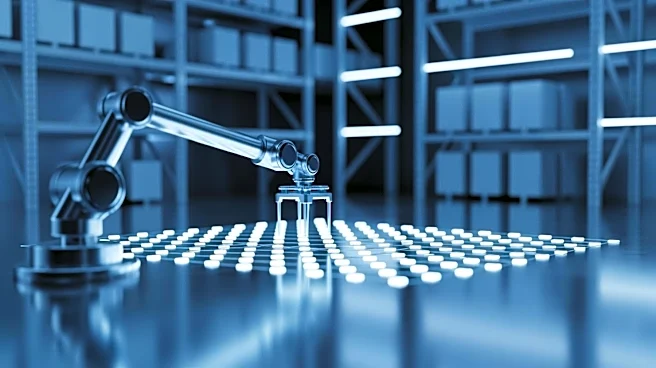
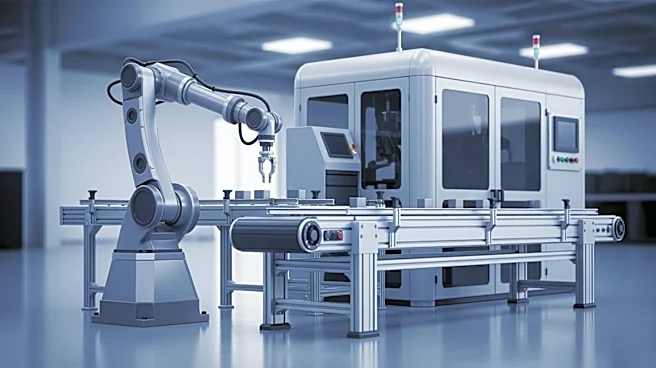
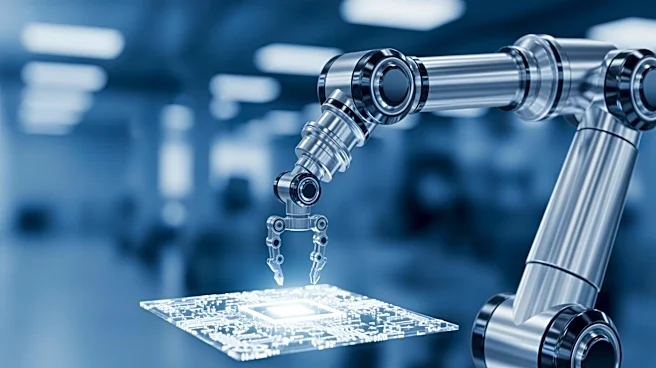
The factory automation sector is experiencing significant advancements with the integration of AI and robotics. The use of articulated arms, SCARA units, and delta robots is expanding beyond traditional automotive assembly into electronics, food processing,
and life sciences. AI-driven vision systems are now capable of integrating quality inspection directly into production lines, enhancing efficiency. Digital twins are being utilized for simulating changes before physical implementation, marking a shift from pilot projects to daily operations. Despite these advancements, the industry faces challenges in integration, particularly with legacy systems and workforce readiness. The market for industrial automation is projected to grow from $137.4 billion to $234.7 billion by 2035.
Why It's Important?
The advancements in factory automation are crucial for maintaining competitiveness in the manufacturing sector. The integration of AI and robotics can lead to increased efficiency, reduced errors, and lower operational costs. However, the transition requires overcoming significant challenges, such as integrating new technologies with existing systems and addressing workforce skill gaps. Successful implementation can lead to a more flexible and responsive manufacturing environment, essential for meeting the demands of modern markets. The growth in this sector also indicates a shift towards more technologically advanced manufacturing processes, which could have broad implications for global supply chains and economic growth.
What's Next?
The future of factory automation will likely involve further integration of AI and robotics, with a focus on overcoming current integration challenges. Manufacturers will need to invest in workforce training to ensure employees can manage and operate advanced systems. The development of standardized data formats and operational expertise will be critical for achieving seamless integration. As the market continues to grow, companies that can successfully navigate these challenges will be well-positioned to lead in the next generation of manufacturing.