
What's Happening?
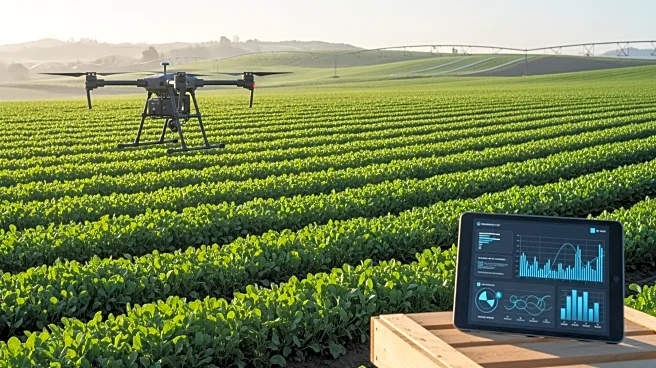
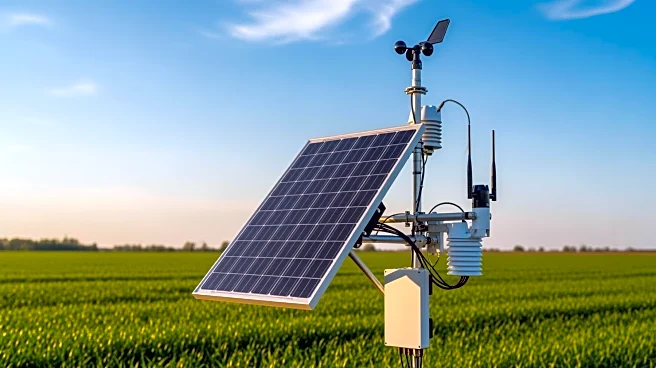
The digital farming software market is projected to experience significant growth, reaching a valuation of $16.3 billion by 2030, with a compound annual growth rate (CAGR) of 14.5%. This expansion is driven
by the increasing adoption of smart farming solutions, substantial investments in agricultural software platforms, and enhanced governmental support for digital agriculture initiatives. The market is also benefiting from the demand for cost-effective farm management and climate-resilient farming techniques. Key trends include the rising use of resource optimization tools, data-driven decision-making in crop management, and the integration of farm financial management systems. Notably, TELUS Agriculture & Consumer Goods acquired Proagrica to enhance its agronomy expertise and platform capabilities, highlighting the industry's focus on innovation and integration.
Why It's Important?
The growth of the digital farming software market is crucial for the agricultural sector as it seeks to modernize and become more efficient. The integration of technology in farming practices can lead to increased productivity, reduced costs, and more sustainable agricultural methods. This shift is particularly important in the context of climate change, as farmers need to adopt practices that are resilient to environmental changes. The market's expansion also indicates a broader trend towards digital transformation in agriculture, which could lead to significant economic benefits for farmers and related industries. Companies involved in this sector stand to gain from increased demand for their products and services, while farmers can benefit from improved crop management and resource use.
What's Next?
As the digital farming software market continues to grow, further advancements in technology are expected to drive innovation. Companies are likely to focus on developing AI-driven solutions that offer personalized guidance and real-time recommendations to farmers. This could lead to more efficient and sustainable farming practices. Additionally, the market may see increased collaboration between technology providers and agricultural businesses to enhance data connectivity and insights. The ongoing development of predictive analytics tools will also play a crucial role in monitoring crop health and optimizing resource use. Stakeholders in the agricultural sector will need to adapt to these changes to remain competitive and capitalize on the opportunities presented by digital farming technologies.