







What's Happening?
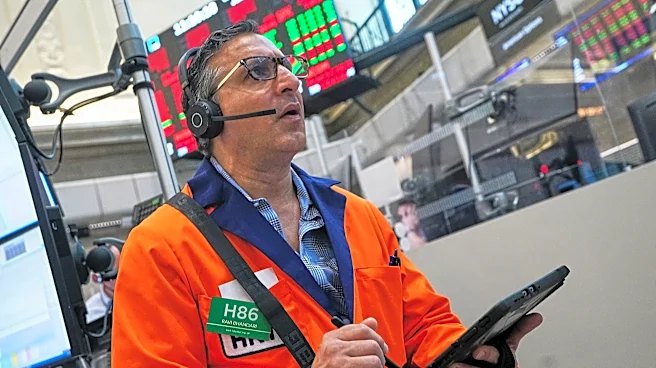
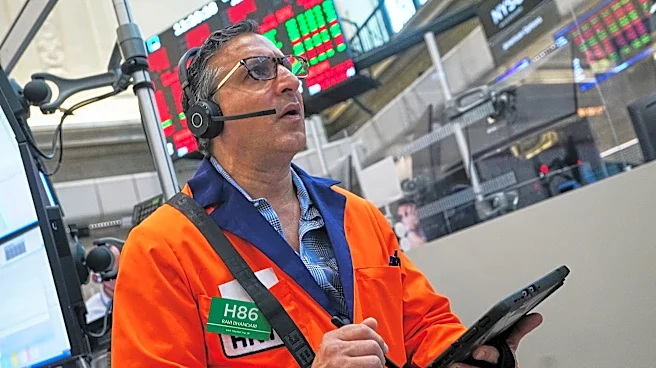
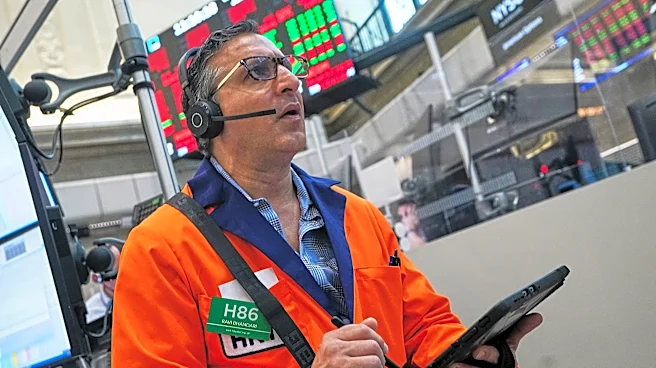
The Dow Jones Industrial Average soared over 900 points, reaching an all-time high, as investors shifted their focus towards value stocks such as banks and healthcare, while technology shares, particularly in the semiconductor sector, faced significant
sell-offs. Broadcom, a major player in the chip industry, saw its shares plummet by 14% following a disappointing earnings forecast, despite strong revenue growth from artificial intelligence. This shift in investor sentiment comes amid weaker-than-expected economic data and cautious signals from Federal Reserve officials. The S&P 500 also saw gains, albeit modest, while the Nasdaq Composite experienced a slight decline due to the pressure on tech stocks. The market's movement reflects a rotation from high-flying tech stocks to sectors perceived as more stable, especially ahead of an anticipated jobs report that could provide further insights into the labor market and interest rate trends.
Why It's Important?
This development is significant as it highlights a potential shift in investor strategy, moving away from technology stocks that have been heavily favored due to their growth potential, particularly in artificial intelligence. The rotation towards value stocks like financials and healthcare suggests a search for stability amid economic uncertainty. The decline in oil prices, influenced by geopolitical factors such as the U.S. stance on Iran, also plays a role in easing inflation concerns, which could impact consumer prices and economic growth. The Federal Reserve's cautious approach to interest rates, coupled with mixed economic data, adds complexity to the market outlook, influencing investor decisions and potentially affecting broader economic policy and financial markets.
What's Next?
Investors are closely watching the upcoming jobs report, which is expected to provide critical insights into the health of the labor market and influence future Federal Reserve policy decisions. A strong report could reinforce the Fed's cautious stance on interest rates, while a weaker report might prompt a reevaluation of economic strategies. Additionally, the ongoing geopolitical tensions, particularly regarding Iran, could continue to impact oil prices and, by extension, inflation and market stability. Stakeholders in the financial and healthcare sectors may benefit from the current market rotation, while technology companies might need to reassess their strategies in response to changing investor preferences.