



What's Happening?
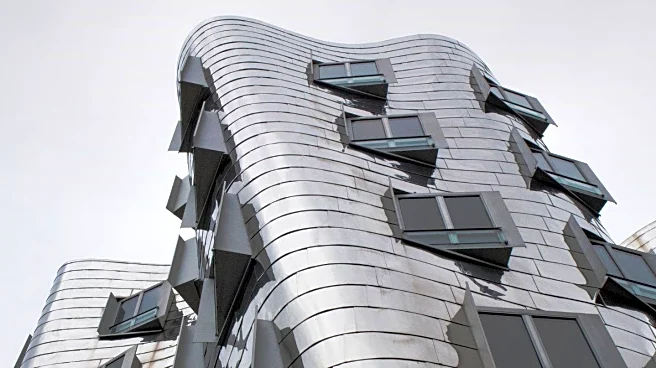
Frank Gehry, renowned architect known for his innovative designs, passed away on December 5. His work, including the Jay Pritzker Pavilion in Chicago's Millennium Park, is celebrated for its democratic and generous architecture. Gehry's designs, characterized by unconventional forms and materials, have left a lasting impact on the architectural landscape. His approach often involved collaboration with other artists and architects, resulting in iconic structures like the Guggenheim Museum Bilbao. Gehry's work in Chicago, particularly the Pritzker Pavilion, exemplifies his ability to blend functionality with artistic expression.
Why It's Important?
Gehry's architectural contributions have significantly influenced modern architecture, pushing the boundaries of design
and construction. His work in Chicago, especially Millennium Park, has become a cultural landmark, attracting millions of visitors and enhancing the city's global reputation. Gehry's designs have also sparked discussions on the role of architecture in public spaces, emphasizing accessibility and community engagement. His legacy continues to inspire architects and urban planners, highlighting the importance of creativity and innovation in shaping urban environments.
Beyond the Headlines
Gehry's work reflects a broader trend in architecture towards integrating art and technology. His use of advanced software to create complex forms has paved the way for future architectural innovations. Gehry's designs also challenge traditional notions of architectural aesthetics, encouraging a more inclusive and diverse approach to building design. His legacy raises questions about the future of urban development and the role of architecture in addressing social and environmental challenges.